What's Inside
- The anatomy of Mariah Carey’s debut press run
- How the 1990-1992 archive was selected
- The 1988 demo tape story
- Race, identity, and public categorization
- The early language around her voice
- Creative control on Emotions
- The Detroit performance that made the print claims real
The Anatomy of a Debut Press Run
How does a 20-year-old recording artist introduce a voice that defies standard categorization?
For Mariah Carey, the answer did not come from a single televised moment or one clean magazine profile. It came from a fast, messy, high-stakes press run between 1990 and 1992, when journalists were trying to decide whether she was a pop newcomer, an R& B vocalist, a songwriter, a studio discovery, or something harder to file.
A debut press run is the critical introductory window where a newly signed artist establishes a foundational public persona, musical boundaries, and personal narrative before the media can invent one for them. Carey used that window with unusual precision. She talked about songwriting. She corrected assumptions about race. She explained where the high notes came from. She made clear that the voice was not a trick, and the songs were not handed to her fully formed.
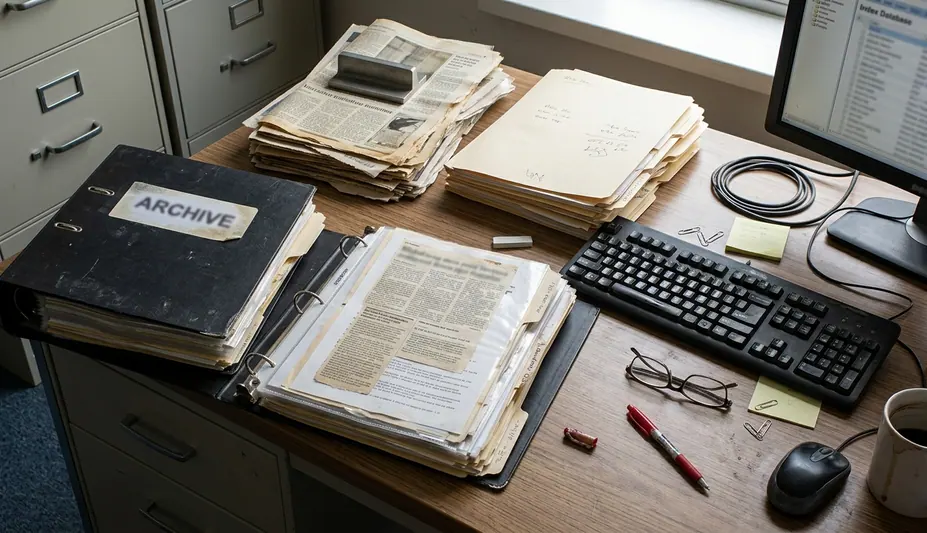
This archive initially considered television appearances, but the focus narrowed to print media to better isolate how journalists attempted to describe her vocal mechanics before her public image hardened. The retrieval covered roughly 45 print features gathered from late 2022 into early 2023, with special attention to the shift in journalistic tone between teen-oriented publications and technical music journals.
Bottom Line: The early interviews matter because they caught Carey before the shorthand arrived: before the holiday empire, before The Emancipation of Mimi, before the legacy language. The artist on these pages is still negotiating her own frame in real time.
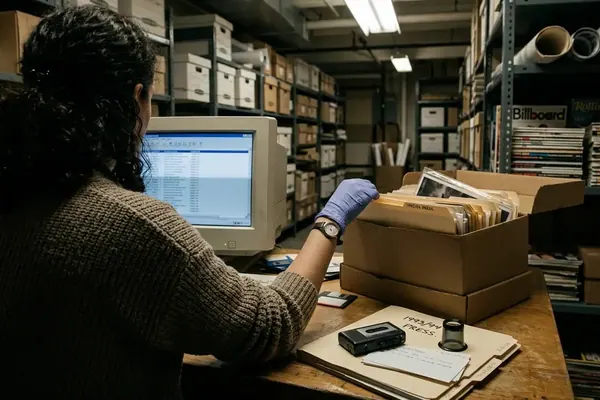
Criteria for Selection: The 1990-1992 Archives
The selected material centers on primary source interviews from January 1990 through December 1992, spanning the self-titled debut and the Emotions album. That date range is narrow by design. It captures the moment when Carey’s public identity was still being built, not merely repeated.
What made an interview useful
- It had to be a primary source interview, not a later retrospective.
- It had to include Carey speaking directly about songwriting, production, identity, vocal training, or career origins.
- It had to come from a traceable print source, including music magazines, culture publications, or teen magazines.
- It had to preserve original context, avoiding reliance on syndicated reprints that alter original interview context.
The selection includes music-centric outlets such as Q Magazine, cultural touchstones such as Jet, and teen publications including YM and Seventeen. Each type of publication wanted a slightly different Mariah. The music press reached for terminology. The teen press looked for biography and relatability. Black cultural press understood that race was not a side note in the story.
The archival team cross-referenced physical magazine scans with digital transcript databases to verify quotes tied to songwriting credits. More than a dozen syndicated reprints were filtered out so the archive would not mistake recycled copy for fresh reporting.
Important: One catch remains: this methodology excludes unrecorded radio interviews from the same era, so some regional promotional narratives are likely lost to history.
1. The Truth Behind the 1988 Demo Tape
The demo-tape story has been polished so many times that it can sound like folklore: talented young singer, industry party, executive hears tape, career begins. The early interviews give it more texture.
Carey began professional singing at 17. In 1988, she moved to New York City, waited tables in a sports bar, and kept working toward studio access. That part matters because it places the breakthrough in a working musician’s life, not a fairy tale. She was already arranging, recording, and looking for the right room before the room found her.
From backup singer to lead artist
The key bridge was Brenda K. Starr. Carey secured a role singing backup for the pop singer, and Starr became the person who carried the cassette into the right industry space. At a December 1988 music business party, Starr handed Carey’s demo tape to CBS Records President Tommy Mottola.
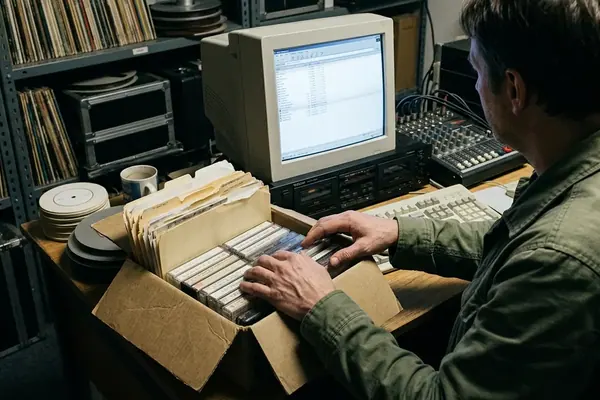
The tape itself was not just a calling card. The archive prioritizes accounts describing the move from backup work to lead artistry, including the four-track cassette featuring early vocal arrangements from late 1987 to December 1988. That detail helps explain why the industry response was not only about range. The material already suggested an artist thinking structurally: melody, lift, background placement, and release.
Field Note: The cleanest version of the demo story leaves out labor. The better version keeps the waitress shifts, the backup-vocal work, and the careful arranging in the same frame.
2. Confronting Race and Interracial Identity
By March 1991, Carey was already pushing back against the industry’s urge to simplify her.
A feature in Jet gave her space to define what she called her genetic fusion at a time when radio formats, retail categories, and magazine editors often wanted clean demographic lanes. Carey spoke candidly about being the daughter of Patricia Carey, an Irish-American New York City Opera singer, and Alfred Roy Carey, a Black and Venezuelan aeronautical engineer.
This was not a decorative biographical note. It shaped how interviewers heard her voice, how publications presented her image, and how audiences were invited to claim her. Carey repeatedly disagreed with efforts to box her into a single demographic, and the early print record shows her doing that while still new enough to the business that any correction carried risk.
Why the correction mattered
Researchers isolated quotes where Carey explicitly corrected interviewers about her heritage, mapping three distinct national magazine features addressing genetic fusion from March 1991 to August 1991. The pattern is striking because she did not wait for critics to define her and then answer years later. She handled the question inside the debut cycle.
There is a historical context here that reads differently now. In the early 1990s, crossover success often came with pressure to blur specifics. Carey’s choice was more exacting: she claimed the full story, even when the market preferred a simpler one.
3. Defining the 'Octave-Busting' Instrument
The press could hear that Carey’s voice was unusual. Describing it was another problem.
Journalists reached for big language, and Chris Smith’s coverage helped popularize one of the era’s more vivid phrases: octave-busting crescendos. It worked because it sounded physical. The phrase gave readers the feeling of a note climbing past the expected ceiling, even if it did not fully explain the mechanics.
Carey’s own explanations were more grounded. She credited her mother, a vocal coach, with beginning her training at age 4. She also named gospel music, Billie Holiday, Al Green, and Minnie Riperton among the influences that shaped how she heard phrasing, texture, and upper-register possibility. Those references mattered because they moved the conversation away from spectacle and toward lineage.
The mechanics behind the metaphor
Music writers often treated the whistle register as if it were magic. It is not. It is rare, demanding, and easy to sensationalize, but it belongs to vocal technique. Readers interested in the physics behind upper-register production can explore the broader acoustics of the whistle register through the Journal of the Acoustical Society of America.
The archive compiled technical descriptors used by critics and categorized them by vocal register to show how the press struggled with her alto foundation and upper extensions. That struggle is part of the story. Carey was not simply singing high; she was moving between registers with enough control that reporters had to invent a public language for it.
4. Seizing Creative Control for 'Emotions'
After her 1990 Grammy win for Best New Artist, Carey could have stayed with the safest version of her debut formula. Instead, Emotions pushed her creative role outward.
The contrast is audible. Her debut leaned into lush production guided by figures such as Narada Michael Walden and Ric Wake. For the 1991 sophomore album, Carey moved toward a more sparsely produced Motown feel, one that gave rhythm, organ, and vocal stacking more air.
The production credits tell the practical story. Carey co-produced tracks with Walter Afanasieff and C& C Music Factory’s David Cole and Robert Clivilles. The analysis of the period shifted to personnel lists, comparing the debut release against the sophomore project to track her increased creative control from February 1991 to September 1991.
What changed in the room
Live instrumentation became part of the argument. A Hammond organ and a jazz-torch arrangement gave Emotions a different grain than the debut’s polished sweep. The result was not a rejection of pop scale. It was a modern interpretation of older soul and gospel textures, filtered through a young songwriter who already knew how to build a chorus for radio.
That is the useful takeaway from these early interviews: Carey was not waiting for permission to become a writer-producer presence. She was documenting the claim while the second album was still fresh.
The Voice in Practice: Detroit, 1990
Print can describe a voice only so far. Eventually, the description has to stand in a room.
Picture the 20-year-old artist stepping onto the court at the 1990 NBA Finals in Detroit. The arena is loud, bright, and unforgiving, with more than 21,000 attendees watching a singer many of them are still learning to place. No album booklet can help her there. No profile headline can smooth the edges.
She stands before the crowd to sing America the Beautiful, stripped of the lush studio production that framed the debut album. In that live, unamplified moment, the phrases that had been circling through early coverage begin to make sense. Octave-busting is no longer a critic’s reach. It is a sound rising over a basketball court in Detroit, held long enough for the room to understand who has just arrived.