Memoirs of an Imperfect Angel is easiest to underrate if you treat it like a normal late-2000s pop album. It was not built that way. The record works more like a closed room: same air, same lighting, same emotional temperature, and the same few fingerprints on nearly every surface.
I keep returning to it because the album catches Mariah Carey at a sharp creative hinge. After the blockbuster velocity of The Emancipation of Mimi and the glossy sprawl of E=MC², she narrowed the frame. That narrowing is the point.
What's Inside
- The 2009 shift from radio-chasing to concept-building
- How The-Dream, Tricky Stewart, Brian Garten, and the Penua Project shaped the sound
- Why “Obsessed” works as satire, not just scandal
- The Foreigner cover, remix strategy, and Angel's Advocate afterlife
- A final verdict on the album’s place in Carey’s catalog
The Architectural Shift of 2009
From hit campaign to closed concept
Failing to understand the conceptual framework of this album means missing the exact moment Carey transitioned into a self-referential R& B auteur. That sounds tidy now, but in 2009 it was a stubborn move. The marketplace rewarded feature stacks, scattered producer lineups, and singles engineered to hit different radio lanes in quick succession.
Memoirs of an Imperfect Angel refused that sprawl. The creative team bypassed the standard practice of collecting beats from a long bench of producers and instead locked into one sonic argument for the whole project. Initial conceptual mapping and thematic outlining ran across early 2009, roughly from mid-February into early March. More than 40 fragmented demo tracks were archived so the album could focus on one unified narrative.
Bottom Line: This was not a playlist pretending to be an album. It was an R& B suite built around repetition, voice, and mood.
The modern read
The decision feels clearer now than it did then. Carey was not simply chasing the next “Touch My Body” or trying to recreate the exact combustion of “We Belong Together.” She was testing whether a major-label Mariah Carey album could operate with the discipline of a boutique R& B project.
That is why the record matters beyond its singles. It captures a recording artist choosing architecture over scattershot impact, and that choice reshapes how the catalog breathes between eras.
Crafting the Sonic Blueprint at Soapbox Studios
The team was the technique
Carey worked exclusively with Terius “The-Dream” Nash and Christopher “Tricky” Stewart on the production side, and that choice gives the album its sealed-in quality. The-Dream brought clipped melodic loops and conversational phrasing. Stewart supplied the glassy knock, the low-end control, and the slow-burn tension. Carey threaded both through her own arrangement instincts.
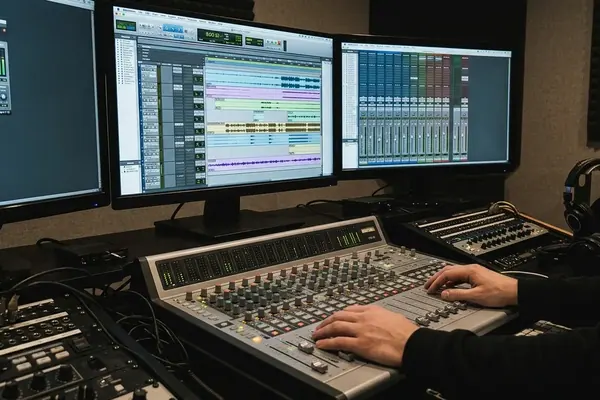
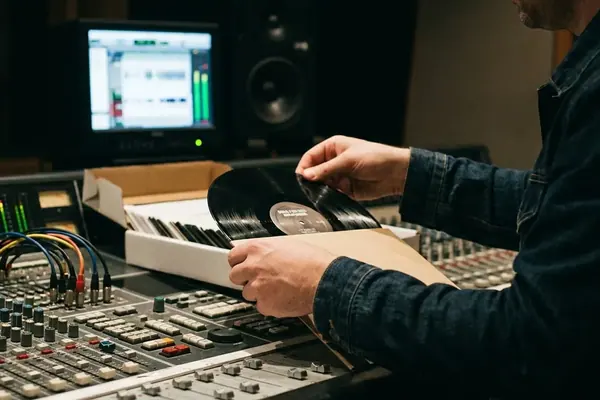
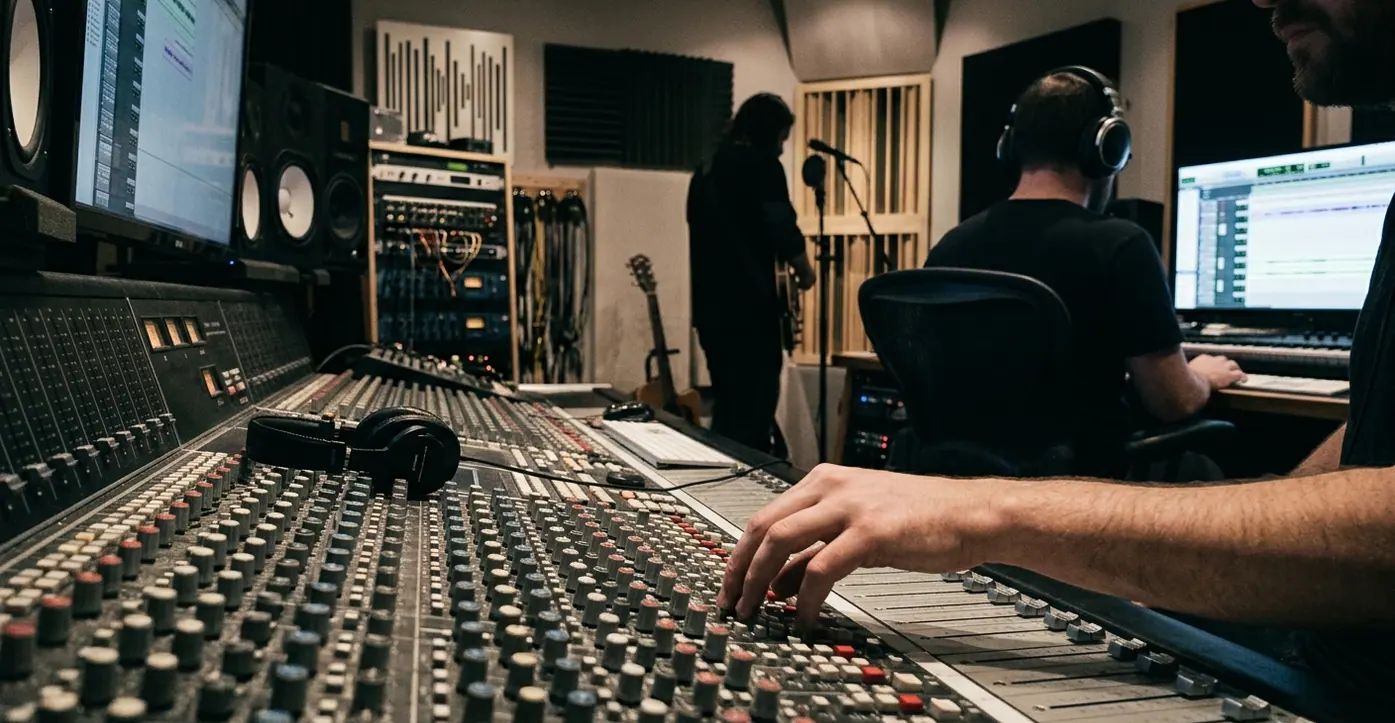
Principal recording and mixing sessions took place across the spring and summer of 2009. Recording engineer Brian Garten and the Penua Project mixing team helped shape the final sound, especially the Minnie Riperton-inspired balladry where the vocal stack needed warmth without blur. The team worked at high resolution to capture intricate melisma without digital clipping, a technical detail that matters because this album lives in tiny bends and upper-register shading.
Hammond B3, melisma, and the whistle as atmosphere
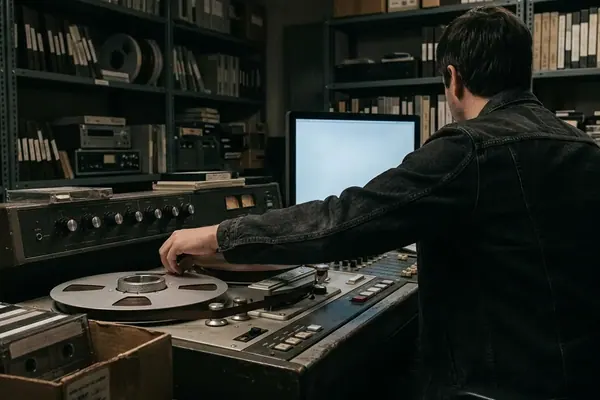
The engineering team routed vocal stems through vintage analog compressors to warm up the whistle register. Beneath several melody lines, the Hammond B3 organ works almost like fabric. It does not announce itself as a church gesture every time; it pads the emotional floor.
That restraint is underrated. Carey’s whistle register can become a headline in the wrong mix. Here, it often behaves like weather. It glints, disappears, returns, and changes the pressure in the room.
The final result is a record that sounds expensive without sounding crowded. On weaker albums, cohesion can become sameness. On Memoirs, sameness becomes a pressure system.
Field Note: Listen to the ballads through headphones once. The lead vocal is only the front door; the background arrangements are where the floor plan gets interesting.
Lyrical Warfare and the 'Obsessed' Phenomenon
A feud turned into pop theater
“Obsessed” premiered on radio in mid-June 2009 and moved through rhythmic and urban programmers over the following week. The record directly addressed rumors and public feuds, but its real trick was tone. It did not sound wounded. It sounded amused.
The target was widely understood to be Eminem, Marshall Mathers, with the lyrics nodding toward his Shade 45 Sirius channel and earlier tracks such as “Superman” and “Jimmy Crack Corn.” Carey and the producers mapped the lyrical metaphors by lifting phrases from the rival rapper’s satellite-radio orbit and folding them into the hook. “Napoleon complex” lands because it is both insult and character sketch.
Why the Auto-Tune matters
The auto-tune vocal processing is not a disguise. It is costume design. The impact of the auto-tuned vocal processing varies depending on whether the listener approaches the track as a serious ballad or a satirical parody, and “Obsessed” only fully opens when heard as parody.
The joke is technical — Carey flattens and digitizes certain edges of the vocal so the song can sneer without shouting. The lead vocal stays cool while the production does the eye-roll.
The visual campaign made the satire physical. For live performance staging, the theatrical backdrop used oversized marionette props, turning the lyrical jab into an image of manipulation, obsession, and puppet-string masculinity. That is not subtle, and it should not be. “Obsessed” works because it understands pop beef as theater.
Important: Reducing “Obsessed” to gossip misses the craft. The single is a precision diss record built with R& B phrasing, pop structure, and comic timing.
Reimagining Classics: From Foreigner to the Remix Era
The rock standard becomes a Carey crescendo
Covering Foreigner’s 1984 hit “I Want To Know What Love Is” could have gone syrupy fast. Carey avoided that by treating the song as a slow lift rather than a vocal demolition derby. The True Worship Church Choir gives the record its communal release, while Hype Williams’ music video places the performance in a widescreen emotional register.
The choir arrangement involved tracking roughly three dozen individual vocalists over a three-day session. That detail explains the density. The choir does not merely arrive at the end to validate the key change; it expands the record’s emotional ceiling.
My personal take: the cover is not the album’s most daring idea, but it is one of its cleanest bridges. It connects Carey’s adult-contemporary command to the album’s R& B interior without pretending those worlds are identical.
The remix machine underneath the era
The era’s second life belonged to remixes. A& R commissioned a dedicated remix collective to strip the original tracks down to raw acapella stems and rebuild them for urban contemporary and rhythmic radio formats. The targeted remix campaign ran from late 2009 into early 2010.
The planned dance remix album, Mariah Carey Vs. Jump Smokers, showed how aggressively the team imagined the material outside the parent album’s tempo and texture. Rights management for those kinds of rebuilds sits in the same legal universe documented by the United States Copyright Office, where ownership, derivative works, and recordings are not casual details.
A caveat matters here: analyzing the complete dance remix strategy requires access to original physical promotional discs, because the parent label never uploaded the full suite of club mixes to modern streaming services. That gap changes how later listeners understand the era. If you only know the album from the standard digital edition, you are missing part of the campaign’s intended movement.
Urban AC and rhythmic formats received their own signals. “Angels Cry” gained Ne-Yo, smoothing the ballad into a duet-ready radio frame. “Up Out My Face” with Nicki Minaj pushed the album’s comic bite into a brighter, more animated register. These were not random add-ons. They were alternate routes through the same emotional city.
The Final Verdict on the Angels Advocate Era
Stop grading it like a singles race
Attempting to evaluate the album’s success solely through peak chart positions rather than its sustained influence on cohesive R& B project structures is the wrong test. Memoirs of an Imperfect Angel asks for album-level listening. It rewards attention to recurring textures, repeated emotional poses, and the way Carey turns self-reference into structure.
Retrospective critical analysis, drawn from music history writing published across the early 2020s, has connected the project’s blueprint to the production notes of more than a dozen major R& B releases in the following decade. The point is not that everyone copied Memoirs outright. The point is that its tight-room method aged better than many broader, louder 2009 releases.
The bridge between eras
The reliance on a tight-knit production team rather than a sprawling roster of beatmakers proved to be the visionary move. It let Carey build a record where the jokes, the heartbreak, the falsetto, the whistle tones, and the remix potential all came from the same central design.
That is why the album sits so strangely and so usefully in her catalog. It looks back to the vocal architecture that made her untouchable in the 1990s. It carries the post-Emancipation confidence of a star who knew radio could still bend around her. It also points forward to the more critically parsed modern Carey, where texture, authorship, and fan reappraisal matter as much as first-week spectacle. Even in a brand universe broad enough to include fragrance, fashion, and M by Mariah Carey, this record remains one of the sharpest examples of Carey controlling the frame.
Make Memoirs of an Imperfect Angel your next front-to-back Carey listen, not a singles skim. Play it as a complete R& B blueprint, and let its discipline change the way you rank the catalog.