Dismantling the Pygmalion Myth
The wrong frame for the right phenomenon
The Pygmalion story gave 1990s profile writers an easy script: powerful label head discovers unknown singer, polishes her, and presents her to the world. It was tidy. It was cinematic. It was also a poor fit for Mariah Carey.
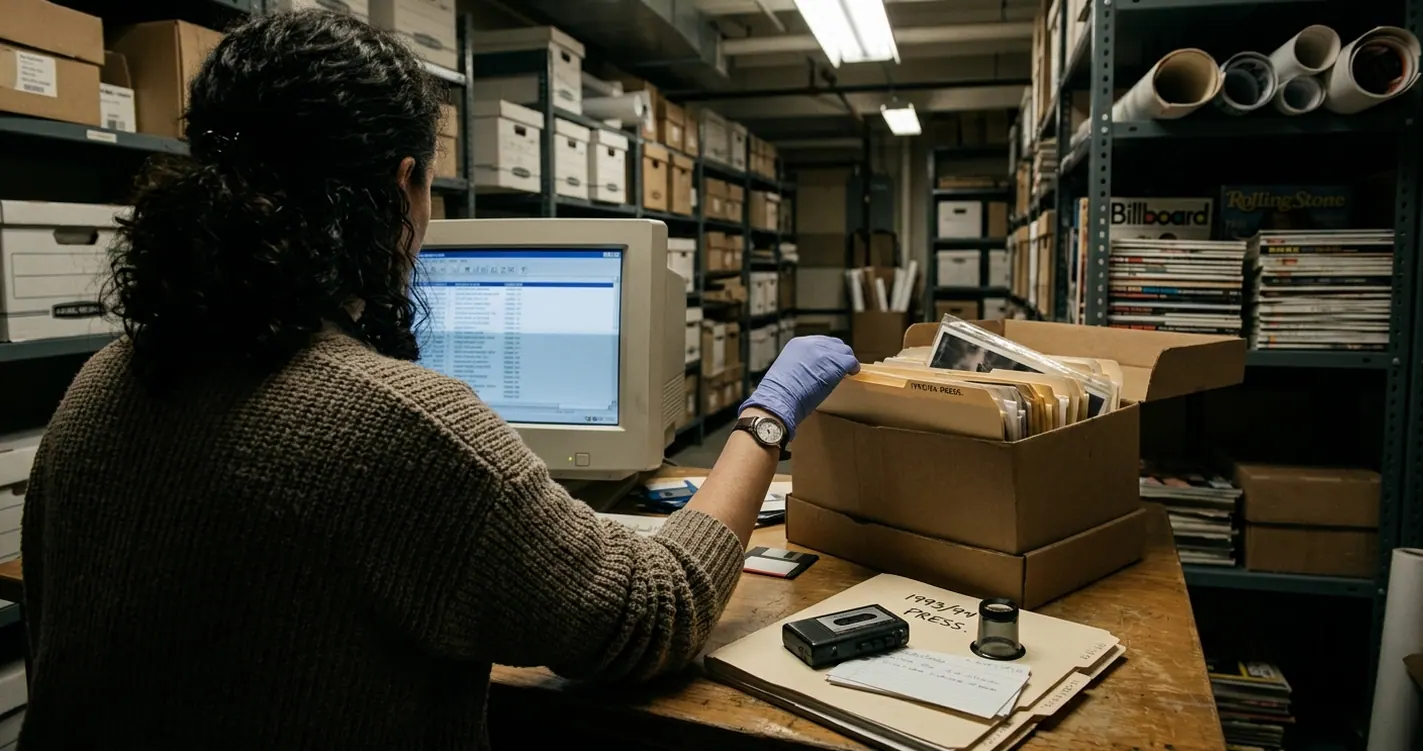
The press archive from 1993 to 1995 tells a more technical story. In interview after interview, the recording artist corrects the frame around her work, especially when journalists reduce her to a voice rather than a writer, arranger, and studio decision-maker. The Pygmalion frame is neat — too neat for a singer who arrived with demo arrangements, stacked background concepts, and a specific sense of how her records should breathe.
During the archival digitization phase, the project began by cataloging print interviews published between January 1993 and December 1995. The useful passages were not the glossy personality lines. They were the moments where Carey explained production mechanics: who arranged the backgrounds, how the vocals were layered, why certain textures appeared, and where the records were meant to sit between pop, R& B, gospel, and hip-hop.
Bottom Line: The 1993-1995 materials do not show an artist being manufactured. They show an artist trying to get journalists to keep up with the work already happening in the room.
Criteria for Archive Selection
How the file was narrowed
I kept the selection window strict: periodicals issued between late August 1993 and early October 1995. That span catches the Music Box cycle, the first major live-concert test, and the opening moves of Daydream without drifting into later mythology.
The source pool favored primary print material over broadcast transcripts. Q Magazine, People Magazine, Bravo, and Hit Krant offered different editorial pressures: British music criticism, American celebrity access, and European youth-magazine packaging. That mix is valuable because the same artist can look very different depending on the outlet’s assumptions.
The filter was simple, but not loose.
- Keep passages that show studio autonomy.
- Keep passages that document genre innovation rather than just chart performance.
- Keep live-performance evidence that answers the early criticism about whether the voice could survive outside the studio.
- Set aside items that only repeat label biography without adding chronology, source detail, or production context.
One methodological qualifier matters here: international youth publications from this era often introduced localized translation errors, so any quote involving production credits had to be cross-checked against English-language press materials before being treated as reliable. Failure to secure original English transcripts often led to misattributed production credits, especially when vocal arranging was folded into general producer language.
1. The 20-Track Vocal Engineering
Solo tracking as control, not vanity
Carey’s background vocals were not decorative frosting. They were architecture.
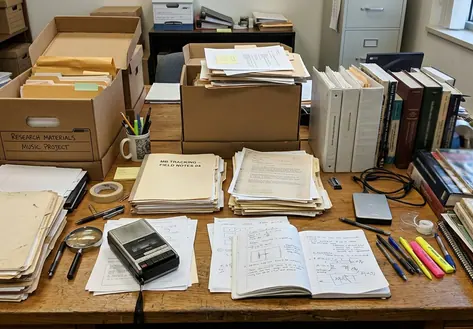
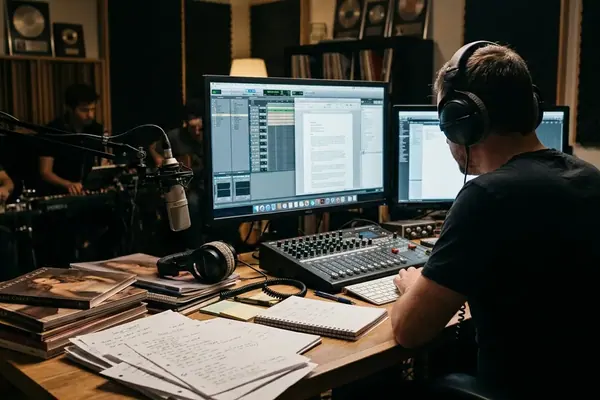
Technical notes from the Music Box period point to a 20-track vocal layering method used during the late 1992 to early 1993 sessions. The striking detail is not just the number of tracks. It is the working method around them: Carey would dismiss the primary co-producer from the control room for stretches of roughly 4 to 6 hours while she built background vocal parts.
That detail changes the meaning of the record. A listener may hear polish; the archive shows labor. The harmonies on this era’s ballads do not simply support the lead vocal. They answer it, thicken it, and sometimes create a second emotional line underneath the lyric.
Patricia Carey’s opera background also belongs in the file, but not as a mystical origin story. As a New York City Opera mezzo-soprano, Patricia gave her daughter a framework for coloratura discipline, breath placement, and quick interval movement. Carey translated that training into pop recording grammar: whistles, sighs, stacked vowels, and background parts that behave almost like a choir conducted from inside the booth.
Field Note: When a profile credits only the visible producer, check whether the artist discusses background arrangements elsewhere. In Carey’s case, that single step changes the authorship map.
2. Pioneering the "Hip-Pop" Blueprint
When the remix became the argument
By the Daydream era, Carey’s pop instincts and hip-hop appetite were no longer running on parallel tracks. They were meeting inside the single.
The clearest case is the "Fantasy" remix, where the Tom Tom Club’s 1981 "Genius of Love" sample becomes more than a clever loop. It gives the record a block-party bounce while Carey keeps the melody bright enough for Top 40. Sean 'Puffy' Combs brings the remix grammar; Ol' Dirty Bastard brings the jolt. The pairing was not polite, and that is why it mattered.
Archive tracking of the late-1995 rollout shows distinct remix vinyl pressings moving to Top 40, adult contemporary, and urban radio programmers during a three-week window. That was not a vague crossover wish. It was a format-by-format campaign built around the same artist occupying several radio identities at once.
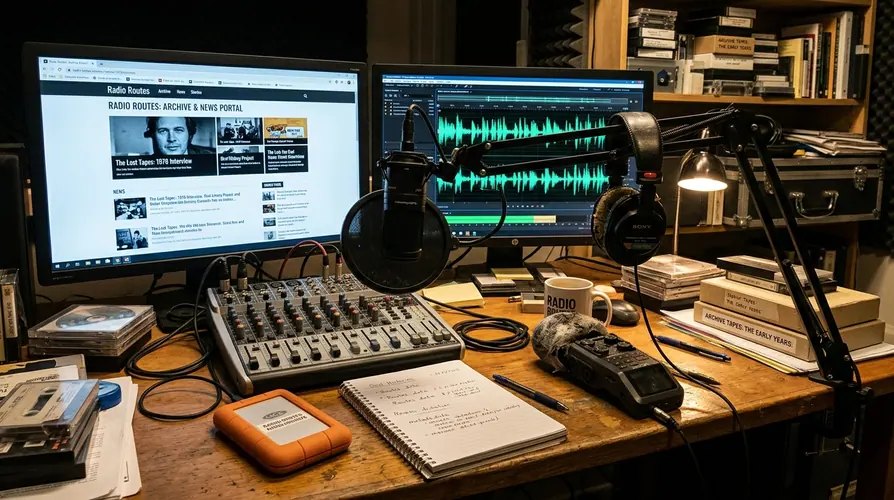
The strategy had friction. The effectiveness of the multi-format radio plan varied heavily depending on regional urban radio programmers’ willingness to play a pop-leaning artist. Still, the record documents an important pivot: Carey was not borrowing hip-hop as costume. She was testing how pop melody could carry hip-hop production into rooms that normally kept those categories apart.
3. Acoustic Authenticity and the Lower Register
The 1970s color inside Daydream
Not every innovation in the archive announces itself with a guest verse. Some of it sits in the grain of the keyboard.
On the late-1995 album release, the sixth track uses a vintage Fender Rhodes electric piano, a choice that pulls the sound toward a 1970s soul palette rather than the brighter synthetic sheen associated with early-1990s adult pop. That instrument matters because it changes how Carey sings around the harmony. The attack is softer. The air around the chords feels warmer. The vocal does not need to compete with a glassy surface.
"Underneath The Stars" is the strongest example of this mood. The Minnie Riperton influence is present, but not as imitation. Carey channels the float, the intimacy, and the sense that the song is arriving from a room lit by one lamp rather than a full stage wash.
Then there is "Melt Away," made with Babyface, Kenny Edmonds. The archive notes the descent of the vocal melody into the lower third octave, which complicates the public obsession with her whistle register. Carey’s high notes were spectacular, but the lower range gave certain Daydream tracks their privacy. It made the records feel less like displays and more like confidences.
4. The Miami Arena Debut and Live Validation
November 3, 1993, as a test case
The early criticism around Carey often circled the same suspicion: could a voice that elaborate exist outside the studio?
The Miami Arena debut on November 3, 1993, supplied the answer in public. The concert marked the kickoff of her first live concert tour in a major southeastern US arena during the early November window, and the timing matters. Music Box had made her more visible than ever, but visibility also sharpened doubts about the mechanics of the sound.
Contemporary concert coverage and broadcast specifications help separate atmosphere from evidence. The performance was not only a stage debut; it was a practical demonstration of breath control, pitch agility, and stamina under arena conditions. The multi-octave voice, including the much-discussed seventh-octave territory, could no longer be treated as a studio rumor.
The technical broadcast details add another layer. For a Top of the Pops appearance, the live vocal feed moved through a transatlantic satellite uplink with latency under about 1.5 seconds. That is an unusually vivid archival clue because it connects the voice to infrastructure: signal path, timing, and broadcast risk, not just applause.
Important: Live validation in this period should be read through both reviews and transmission records. A televised vocal can be a performance document and a technical document at the same time.
5. Building the Career Awareness Camp
Commercial peak, public obligation
The mid-1990s file is not only a studio file. It is also a philanthropy file.
In 1994, Carey established a career awareness initiative in partnership with the Fresh Air Fund, a historic youth charity founded in 1877. The timing is important because this happened during a peak commercial period, when the easier move would have been pure image maintenance. Instead, the archive shows a program tied to exposure, work pathways, and proximity to professional environments.
Kelly Price and Shanrae Price make the story concrete. Both were connected to the Fresh Air Fund before becoming salaried touring personnel in Carey’s live operation. That movement from beneficiary to working vocalist gives the camp a more grounded meaning. It was not just a name attached to a press release; it intersected with the labor structure around the tour.
This is where the archive resists celebrity simplification again. The same period that produced high-gloss magazine covers also produced documents about access, mentorship, and work. The philanthropic record does not replace the music history. It widens it.
The 8-Track Genesis
Before the gown, before the empire
The corporate fairy tale is easy to recognize: the Sony Music machine, the executive discovery, the $34,000 Vera Wang gown, the fast ascent into pop aristocracy. Those details are real enough as symbols, but they are late symbols. They arrive after the essential act of self-construction had already begun.
The more useful origin point is smaller and rougher. Before the major-label apparatus, Carey was working in Manhattan’s service industry for roughly 14 to 18 months while trying to finance early recording sessions. That fact strips the story of its showroom lighting. It puts the emphasis back on time, cash, favors, tape, and endurance.
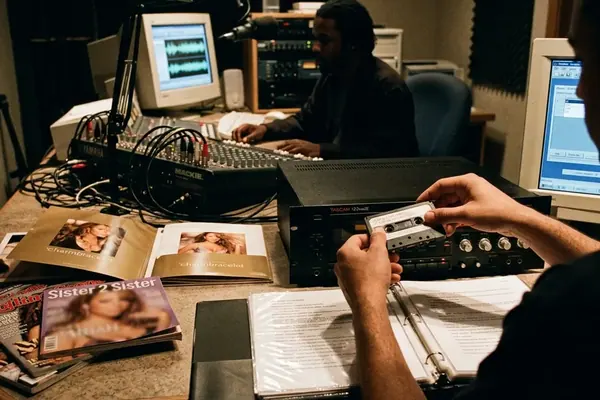
The demo path moved from an initial 8-track reel-to-reel setup into a 24-track professional studio configuration funded by her brother Morgan. That progression matters because it shows an artist increasing the technical capacity around songs before the industry had formally claimed them. The tape handed to Tommy Mottola did not come from nowhere, and it did not arrive as raw potential waiting for corporate definition.
In 1988, while working as a waitress in Manhattan, Mariah Carey recorded her first demos on an 8-track reel-to-reel and then a 24-track studio setup funded by Morgan Carey.