The Stakes of the Late 2000s Era
Failing to analyze Mariah Carey's press archives from the late 2000s to early 2010s means missing the exact blueprint of how a pop icon transitions into a permanent multimedia powerhouse.
If the career is viewed only through 1990s vocal acrobatics or the 2005 force of The Emancipation of Mimi, the archive flattens. It turns Mariah Carey into a sequence of peaks instead of a recording artist who learned how to move across charts, film, home-design press, holiday programming, and controlled personal disclosure with unusual precision.
This era, from 2007 through 2013, is where the public record changes texture. The working file for this review covers April 2007 through December 2013 and includes roughly 310 distinct media appearances and published interviews. I started by considering the 2005 comeback as the opening frame, then cut it from the core review to keep the focus strictly on the multimedia transition phase.
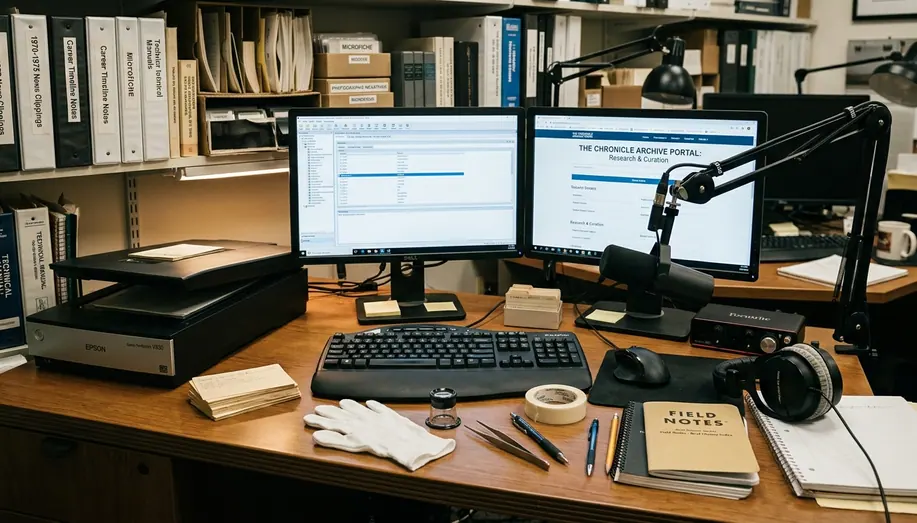
Bottom Line: The 2008 to 2012 press cycle is not a footnote after The Emancipation of Mimi. It is the period when Mariah Carey’s celebrity architecture becomes fully visible.
What's Inside
- The Stakes of the Late 2000s Era
- Criteria for Selection
- The E=MC² Chart Supremacy and the 18th No. 1
- The Indie Film Pivot: Tennessee and Precious
- The Tribeca Triplex Reveal
- Personal Transparency and Health Battles
- Expanding the Holiday Empire: Merry Christmas II You
- The Final Verdict on Carey's Media Strategy
Criteria for Selection
The archive was not sorted by volume alone. A loud press cycle can distort chronology, especially when tabloid items multiply around a single appearance. For this list, the useful question was narrower: which moments changed how later coverage had to describe her?
The selection began with more than 4,000 digitized press clippings, then narrowed through weekly chart data from January 2008 to December 2010, film-review context from the independent circuit, and provenance checks against dated interviews. Billboard Hot 100 placement mattered because it anchored public impact. Nielsen SoundScan mattered because it helped separate purchase behavior from radio familiarity during a period when digital sales were reshaping the singles market.
- Chart impact: Billboard Hot 100 milestones, launch-week sales context, and certification pathways, with verification supported where relevant by the official RIAA certification database.
- Cinematic repositioning: independent drama roles that moved the press conversation away from earlier studio-driven narratives around Glitter.
- Interview provenance: authorized interviews, issue data, and direct quotations instead of recycled entertainment-site summaries.
- Media range: moments that crossed music, film, design, lifestyle, and family coverage without becoming interchangeable publicity.
A qualifier matters here: some late-2000s lifestyle interviews remain locked in out-of-print magazine issues, so the strongest reading comes from publication sequencing rather than a simple keyword search.
Important: Failing to account for the shift from physical to digital sales tracking in late 2007 skews the chart impact analysis.
Five Defining Career Moments
-
1. The E=MC² Chart Supremacy and the 18th No. 1
E=MC², released in April 2008 as Mariah Carey’s 11th studio album, arrived with the confidence of an artist who knew the chart record was not decorative. It was leverage.
The lead single “Touch My Body” became her 18th No. 1 single on the Billboard Hot 100. That fact carries more weight when placed inside its tracking window, April 15, 2008 to April 22, 2008, because the market was no longer behaving like the CD-single era. Digital purchasing had become central to the story. Billboard’s primary U.S. singles chart supplied the public ranking; Nielsen SoundScan supplied the industry-standard sales-tracking layer that made the launch week legible.
The press knew exactly what it had: a veteran superstar breaking historical ground while still competing inside a changed consumer system. That is the real story of E=MC². Not nostalgia, not a victory lap, but chart supremacy under new rules.
Field Note: For this moment, physical and digital sales tracking deserves more archival weight than radio airplay because it captures direct consumer behavior during the album’s launch frame.
-
2. The Indie Film Pivot: Tennessee and Precious
The film pivot worked because it changed the scale of the room.
After years of entertainment coverage that treated Glitter as shorthand for risk, Carey’s move into independent drama created a different viewing condition. In Tennessee, released into the 2008 film conversation, she played Krystal without the usual machinery of pop-star spectacle. The performance did not need to announce a reinvention. It needed to be quiet enough for critics to watch her again.
Then came Lee Daniels’ Precious. The critical press around the film’s independent-circuit premieres, running through the January 2008 to November 2009 research window, repeatedly noticed the stripped-down quality of her performance. The effectiveness of the independent film pivot heavily depended on the specific directors chosen, contrasting sharply with earlier studio-driven projects.
That is why this moment belongs beside the chart records. It proves Carey was not merely extending her brand into film; she was submitting to a director-led dramatic environment where glamour had to disappear.
-
3. The Tribeca Triplex Reveal
The Tribeca triplex coverage is easy to misread as celebrity-home candy. It is sharper than that.
The televised home tour with Barbara Walters, followed by architectural and interior-design press, gave the public a controlled look at a three-story downtown Manhattan residence that Carey had moved into in 2001. The residence was designed by Mario Buatta in an Art Deco register, with dramatic scale, polished surfaces, and a sense of theatrical arrival that matched the Carey mythology without reducing it to clutter.
The white baby grand piano, originally owned by a mid-century Hollywood icon, became the perfect archival object: glamorous, specific, and useful. It linked songwriting, old Hollywood, and domestic staging in one image. Standard gossip coverage would have flattened that detail into excess. Design coverage preserved the vocabulary of the room.
This is also where lifestyle press intersects with the world of M by Mariah Carey. Taste, scent, interiors, and music all orbit the same public persona, but the triplex gave those abstractions a physical address.
-
4. Personal Transparency and Health Battles
The press tone changed after her April 30, 2008 marriage to Nick Cannon. Tabloid coverage remained loud, but the more durable material came from authorized interviews where Carey controlled the terms of disclosure.
That distinction matters most in the coverage of her pregnancy with twins Moroccan and Monroe, born April 30, 2011. The archive should not rely on speculative medical reporting. The reliable thread is her own candor in interviews about documented complications, including preeclampsia and gestational diabetes.
There is a discipline to reading these pieces. Pull the direct quote. Confirm the issue date. Check whether the article is a primary interview, a syndicated rewrite, or a tabloid item feeding on the interview after publication. Only then does the personal narrative become usable as history.
Important: This part of the archive requires access to out-of-print physical magazine issues because many lifestyle interviews from this period were never fully digitized by their publishers.
The result is not a softer version of Carey’s public image. It is a more exact one: a star using authorized intimacy to interrupt speculation before it hardens into chronology.
-
5. Expanding the Holiday Empire: Merry Christmas II You
By late 2010, Carey’s holiday catalog was no longer just seasonal. It was institutional.
The press cycle around Merry Christmas II You, from September 2010 to December 2010, shows how carefully she extended the world created by her 1994 holiday release. The album did not simply repeat a familiar Christmas formula. It re-entered a space she had already helped define, then updated it with new studio context, television-ready warmth, and contemporary production.
The lead single “Oh Santa!” is central to that reading. Her collaboration with Jermaine Dupri gave the song a bright, percussive lift, while the songwriting process included the use of a vintage electronic keyboard. That instrument detail matters because it pulls the archive out of abstraction. You can hear the construction: cheer, rhythm, melody, and a little old-machine sparkle.
The holiday expansion also strengthened her media calendar. December stopped being merely a promotional season and became part of the Carey press infrastructure.
The Final Verdict on Carey's Media Strategy

The 2008 to 2012 media strategy is the key to understanding Mariah Carey’s long game. Chart dominance alone would have preserved her as a commercial giant. Independent cinema alone would have made a respectable sidebar. Lifestyle interviews alone would have fed celebrity coverage for a season. Together, they formed a durable public system.
This is the point the archive keeps proving: Carey did not simply survive changing formats, changing tabloids, changing film expectations, and changing sales mechanics. She used each one. E=MC² secured the numbers. Precious shifted the acting conversation. The Tribeca triplex translated persona into architecture. The pregnancy interviews reclaimed the medical narrative. Merry Christmas II You expanded the holiday estate.
To truly understand Mariah Carey’s genius, stop viewing her solely as a 90s vocal prodigy or as the triumphant center of The Emancipation of Mimi. Start the archive at 2008, build it across charts, cinema, and lifestyle press, and read Mariah Carey as the multimedia strategist she had already become.