Mariah Carey and Walter Afanasieff built one of pop’s most consequential studio partnerships by treating the ballad as architecture: melody first, vocal space protected, drama earned note by note.
What's Inside
- The Interrupted Master: A Piano Demo Changes Everything
- Enter the Executive Staff Producer
- Anatomy of a Ballad: The 'Hero' Sessions
- Building the Wall of Sound: A Christmas Miracle
- Echoes of an Era: The Hall of Fame Legacy
The Interrupted Master: A Piano Demo Changes Everything
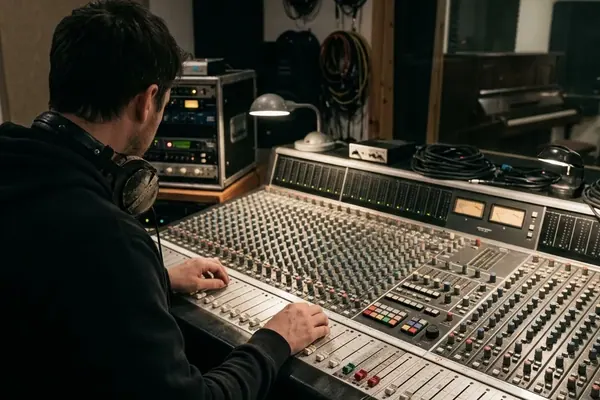
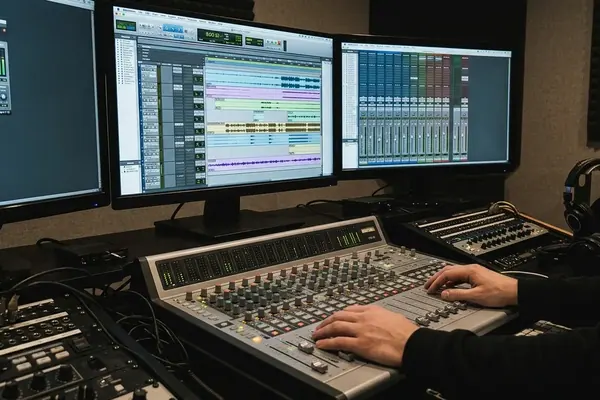
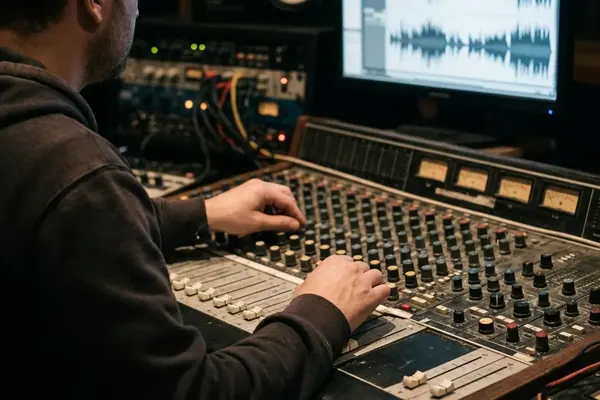
The room should have been quiet in the practical way mastering rooms are quiet: a final listen, a few technical decisions, then the record leaves human hands and becomes product. Instead, Columbia executives stopped the process.
They had heard a raw piano-and-vocal demo of “Love Takes Time,” and the decision suddenly felt bigger than sequencing. The debut album was close to manufacturing, inside a tense two-to-three-day window, but the demo had that unmistakable thing: a singer already making the room lean forward. Holding it for a sophomore release would have been tidy. It also would have wasted the moment.
The demo that changed the deadline
The risk inside the arrangement
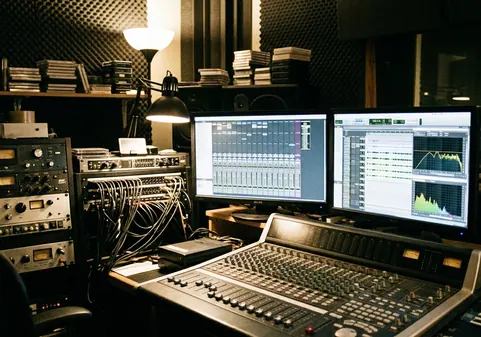
What mattered was not polish. It was urgency. “Love Takes Time” sounded like a private confession before anyone dressed it for radio, and that is exactly why it could not wait.
The contrast with “Vision of Love” sharpens the story. That earlier single, shaped with Rhett Lawrence and co-writer Ben Marguiles, had already gone through a more deliberate sculpting process. Its tempo moved away from a 1950s-style shuffle toward a slower, more deliberate groove before its chart entry. “Vision” introduced the recording artist as a technical force; “Love Takes Time” made the vulnerability feel unavoidable.
Important: The interrupted mastering session was not a romantic studio myth about chaos. It was a commercial deadline colliding with a creative judgment, and the label chose the song.
That interruption set the tone for what Afanasieff and Carey would later refine: the dramatic ballad as a high-stakes machine, built to leave enough air for a voice that could move from smoke to lightning in a single phrase.
Enter the Executive Staff Producer
Walter Afanasieff did not arrive as a decorative studio name. Born in 1958, he came through the musician-producer path, then relocated to the San Francisco area during a transition in 1981 that helped establish his west coast base of operations.
From assigned collaborator to architectural partner
By the time he became an executive staff producer at Columbia Records under president Don Ienner, Afanasieff had a useful position inside the system. He could work like a label insider without flattening a singer into a label formula. That distinction matters with Carey because her early records needed scale, but not clutter.
His arrangements tended to feel polished and expansive, yet the best ones kept the center lane open. Multiple acoustic textures could sit around the lead vocal rather than fight it. Piano, programmed percussion, guitars, synth pads, and background vocals were not piled on for size alone; they were placed so the lead frequencies stayed legible.
Why the pairing worked
Here is the simple version: Afanasieff built rooms big enough for Carey’s voice.
Plenty of producers can make a track sound expensive. The harder job is making an expensive track sound emotionally direct. Carey’s vocal acrobatics needed harmonic lift, rhythmic patience, and a mix that would not punish melisma. Afanasieff’s style gave her that frame, especially on ballads where a lesser arrangement might have mistaken volume for drama.
I keep coming back to the same comparison: with another singer, some of these arrangements might read as grand. With Carey, they become elastic. She bends them from inside.
Anatomy of a Ballad: The 'Hero' Sessions
“Hero” began with a different destination. During the Music Box sessions, the song was originally intended for Gloria Estefan and the Epic Records soundtrack to the Dustin Hoffman film Hero. Then the direction changed, and Carey kept it for her own project.
That decision was not just a matter of ownership. It changed the song’s emotional scale. In another singer’s hands, “Hero” could have been a clean soundtrack anthem. In Carey’s catalog, it became a central text: direct, durable, and almost stubborn in its refusal to dress up its message.
The workstation beneath the anthem
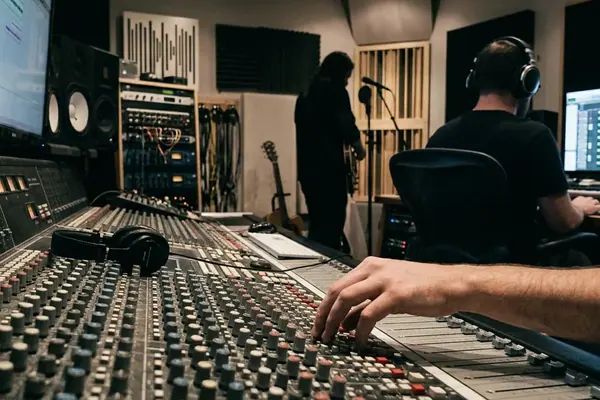
The technical build is easy to underestimate because the lyric is so plainspoken. The composition relied on a flagship digital workstation, with a modified steel acoustic guitar synthesizer patch associated with the Korg Trinity sound world. Around it sat a complex Russian-Latin-Spanish chord progression, arranged during an intensive studio block that ran roughly two months.
The studio details here are best read as production-history reconstruction: personnel recollections and release timelines rarely preserve every patch edit, overdub choice, or late-night mix adjustment. Still, the musical logic is clear. The programmed guitar color gives the track a plucked intimacy, while the harmonic motion keeps nudging the vocal upward.
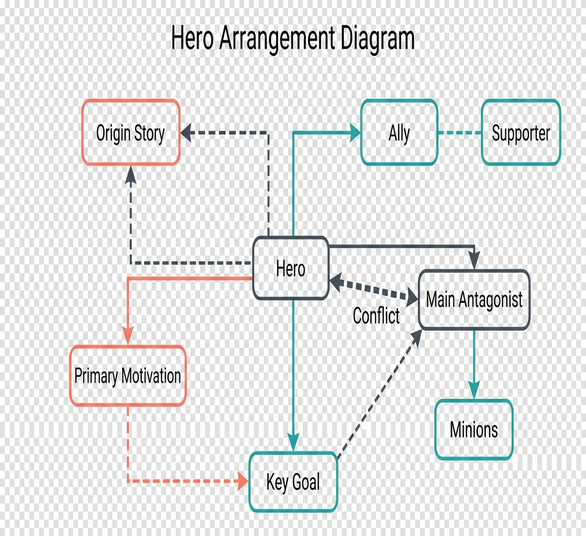
One catch: executing this specific production style demands a vocalist capable of navigating dense, multi-octave leaps without being overpowered by heavy synthesizer patches. A weaker vocal would sit inside the track. Carey sings over it, through it, and finally beyond it.
Field Note: The effectiveness of the acoustic synthesizer patches varies heavily depending on the room acoustics during the final mixing phase.
That is the difference between a ballad that merely swells and one that holds. “Hero” does not win by surprise. It wins by control.
Building the Wall of Sound: A Christmas Miracle
“All I Want For Christmas Is You” started humbly, composed on a simple Casio keyboard. That origin matters because the finished record sounds like it arrived with sleigh bells, a choir, and a whole department store window already attached.
A small melody, a large room
The creative solution was not to modernize Christmas. Carey and Afanasieff leaned backward. For the 1994 Merry Christmas album, they built a Phil Spector-inspired wall-of-sound approach: dense percussion energy, stacked backgrounds, bright piano movement, and enough retro sparkle to make the track feel older than it was.
That could have turned muddy fast. Attempting to apply a wall-of-sound production to a thin vocal arrangement results in a muddy mix that buries the lead melody. Here, the lead line stays crisp because the arrangement treats Carey’s voice as the lead instrument, not as another layer in the holiday pileup.
The gospel weight beneath the glitter
Co-producer Loris Holland’s Hammond B-3 organ work gave the record its gospel heat. Multiple tracks of that classic tonewheel organ added depth under the pop brightness, so the song had church texture without losing its radio snap.
The result is a record that can survive bad speakers, crowded malls, family kitchens, and clean digital playlists. Its later download-era surge made that clear: during a peak stretch of a few weeks in the 2005 holiday season, the track dominated download charts and found a new commercial rhythm outside its original 1994 release cycle.
Bottom Line: The Christmas record works because the production is maximal, but the melody is not. The hook stays simple enough for everyone to carry.
Echoes of an Era: The Hall of Fame Legacy
By late 2007, the Carey catalog was being framed with unusual precision. The September 18, 2007 reissue of MTV Unplugged brought the acoustic performances back into view, while promotional events at Macy’s New York for M by Mariah Carey placed the recording artist inside a broader post-The Emancipation of Mimi public moment.
Reissue, retail, recognition
The acoustic reissue and fragrance launch moved through a tightly coordinated promotional blitz of roughly two weeks in late 2007. On paper, that sounds like scheduling. In cultural terms, it linked three versions of Carey: the live vocalist, the pop brand, and the Long Island artist whose early ballads had already become part of people’s private histories.
The Long Island Music Hall of Fame marks that regional legacy through its inductee record, and the October 21, 2007 ceremony gave the partnership’s era a formal echo. Hall of fame language can feel stiff, but this catalog resists stiffness. These songs were used at graduations, in bedrooms, at weddings, after breakups, and in moments of public grief.
The emotional reach extended into mourning, including the shadow cast by the December 7 Long Island Rail Road tragedy. That is part of why the Carey-Afanasieff work still lands differently from many glossy adult-pop records of the same period. The arrangements were built for spectacle, but listeners kept using them for survival.
A scene from the afterlife of the songs
On October 21, 2007, imagine the Long Island room settling as the induction begins: programs in laps, camera flashes bouncing off dark jackets, someone in the back mouthing a chorus before the applause starts. Outside, the promotional machinery keeps moving through New York. Inside, for a few minutes, the songs are not products at all. They are voices people brought with them.