Butterfly did not arrive as a tidy album cycle. It arrived in motion: a separation announcement, a physical move, a new production vocabulary, and a press corps trying to describe a recording artist who was no longer willing to be filed under the same old pop shorthand.
The archive matters because the interviews were not written with hindsight. They caught Mariah Carey in the middle of the turn.
What's Inside
- The 1997 Musical and Personal Shift
- Criteria for Selection
- Archive Highlights: Sound, Style, and Independence
- Archive Highlights: Business and Vulnerability
- Preserving the Butterfly Legacy
The 1997 Musical and Personal Shift
To read the Butterfly press run correctly, the timeline has to start before Butterfly. In the late 1980s and early 1990s, Carey was discovered by Tommy Mottola and introduced to the public through a conservative, middle-of-the-road pop balladry framework. The voice was presented as the event. The image around it was carefully contained: formal gowns, controlled television appearances, and a crossover strategy built for adult contemporary radio as much as Top 40.
That precedent is what makes May 1997 feel so sharp in the archive. Between May 30, 1997, and June 5, 1997, the story shifted from private strain to public rupture, with the separation announcement and Carey’s relocation from a multi-acre suburban estate to a private metropolitan residence. The geography reads almost symbolically on the page: out of the Sony mansion, into a life with fewer handlers standing between the artist and the work.

The timing matters—these interviews are not anniversary reflections polished by later memory. They document a creative and personal rebirth as it was being negotiated, photographed, challenged, and sometimes misunderstood. The 1997-1998 press run becomes a live record of a major artist revising the terms of her own public identity.
Bottom Line: The Butterfly archive is most useful when read as a transition file, not a nostalgia file.
Criteria for Selection
This curated collection focuses exclusively on primary source interviews and related print features from late 1997 through late 1998. The working set comes from verified print publications from the era, including Rolling Stone, Vibe, and Entertainment Weekly, rather than post-2010 retrospective interviews or later commentary.
The curation process was intentionally narrow. Scanning and optical character recognition covered nearly 50 distinct print magazine features published from September 1997 through November 1998. From there, the strongest items were selected for what they reveal at the intersection of musical evolution, business decision-making, and personal emancipation.
Important: The insights here reflect Carey’s immediate, real-time reactions in period publications. They do not account for subsequent memoirs, later interviews, or historical revisions that reshaped the narrative after the fact.
That boundary is not a limitation to apologize for; it is the point of the file. Relying on post-2010 retrospective interviews often fails to capture the immediate, high-stakes tension of the 1997 label negotiations. The degree of creative control discussed in the press varied heavily depending on whether the publication was a mainstream pop magazine or a dedicated urban music journal, and that variation tells us how differently the same artistic shift was being received.
Vibe could hear the hip-hop architecture more fluently. Entertainment Weekly tracked the pop-market shock of the change. Rolling Stone sat closer to the emotional and biographical rupture. Together, those angles give the archive its texture.
Archive Highlights: Sound, Style, and Independence
1. The Hip-Hop Integration
The most audible break in the Butterfly era is the way Carey moved hip-hop from flirtation to structure. “Honey” brought Puff Daddy into the opening argument of the album, not as decoration but as a framing device. Trackmasters sharpened the record’s radio surface, while “The Roof” reached deeper into atmosphere by building around the 1995 regional hip-hop sample associated with Mobb Deep’s “Shook Ones.”
Danyel Smith’s Vibe interview registered this as more than a guest-producer headline. It placed Carey inside a conversation about sound, audience, and ownership that urban music journalism was better equipped to hear in real time. David Browne’s Entertainment Weekly review, by contrast, functioned as a useful mainstream reaction to the so-called “Urban Mariah” shift: alert to the change, sometimes cautious about its implications, and valuable precisely because it captured the pop press recalibrating its language.
The drum loop on the third track is a small archival hinge. It shows that Butterfly was not simply adding hip-hop signifiers to a ballad singer’s palette. It was reorganizing the center of gravity.
2. Personal Emancipation
The recurring press theme was freedom, but the best interviews make that word feel physical. Carey’s use of the Latin phrase levior aura, usually rendered as “lighter than a breeze,” became a concise emblem for the period. It matched the album title, the loosened vocal approach, and the visible fact of her departure from Mottola’s control.
This is where the archive becomes unusually intimate. The move away from the estate was not treated only as celebrity real estate drama. In the strongest pieces, it reads as part of the same system as the music: fewer restrictions, more rhythmic risk, more direct speech, more room for the writing to breathe.
Field Note: When cataloging these interviews, the strongest items are often the ones that connect a lyric, a location, and a production choice in the same paragraph.
3. The Image Overhaul
The visual press noticed the change immediately. The “Honey” video, shot in August 1997, gave editors a clean before-and-after frame: conservative gowns gave way to Gucci stilettos, Sergio Valenti jeans, and the cinnamon-toned MAC “Spice” lip pencil. Those details can look minor until they are read against the earlier image architecture.
Fashion and lifestyle coverage sometimes flattened the change into sex appeal, but the archive rewards a closer read. The styling did not sit apart from the music. It made the same argument as the songs: the old presentation had become too narrow for the artist making the record.
The “Honey” look also gave photographers a new grammar. Movement replaced stillness. Sunglasses, denim, and heels replaced the ceremonial gown. The result was not casual; it was controlled in a different direction.
Archive Highlights: Business and Vulnerability
4. Executive Moves
The business story is easy to underread because the personal story is so dramatic. Yet the founding of Crave Records in 1997 belongs near the center of the Butterfly archive. It positioned Carey not only as a singer-songwriter navigating a difficult transition under Sony Music Entertainment, but as an executive attempting to build a subsidiary imprint while her own career was under heavy scrutiny.
The chronology matters here. The establishment of the imprint sits between February 1997 and July 1998, the same window in which the Butterfly narrative was being publicly defined. Signing acts such as Allure gave the label a tangible roster, but it also exposed the complexity of the vanity-label model. Carey was creating space for other artists while still fighting for interpretive space around her own work.
This is not the later, cleaner branding logic that would surround projects like M by Mariah Carey. Crave belonged to a messier moment: a recording artist testing institutional power from inside the institution that still governed much of her distribution, promotion, and public framing.
5. Unprecedented Vulnerability
The emotional candor in this period is not incidental. Interviews with journalists such as Mim Udovitch for Rolling Stone show Carey speaking with unusual directness about identity, pressure, and the cost of being treated as a product before being understood as a person.
The discussion of multiracial identity, especially around “Outside,” gives Butterfly one of its most durable archival through-lines. The song’s language of not fully belonging was not abstract. In period interviews, Carey connected it to lived experience: the instability of being read differently by different audiences, the strain of categories that never quite fit, and the loneliness built into that misrecognition.
The physical toll also entered the record. During one 45-minute print interview session, stress-induced dermographism was documented as appearing on her skin. That detail is striking because it resists polish. It makes the cost of the era visible without turning it into metaphor.
The vulnerability did not soften the business story. It sharpened it. Butterfly’s press archive shows an artist negotiating contracts, sound, race, image, and bodily stress in the same public season.
Preserving the Butterfly Legacy
The 1997-1998 press archives preserve the moment before the narrative hardened into legend. They show Mariah Carey taking control of her sound through hip-hop collaboration, her image through deliberate visual revision, and her public story through interviews that were often tense, revealing, and highly specific to their publication context.
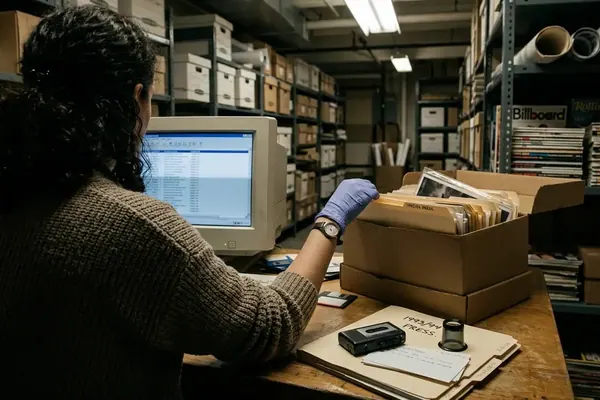
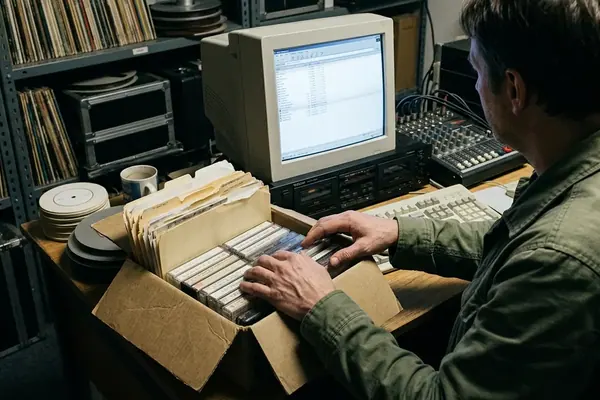
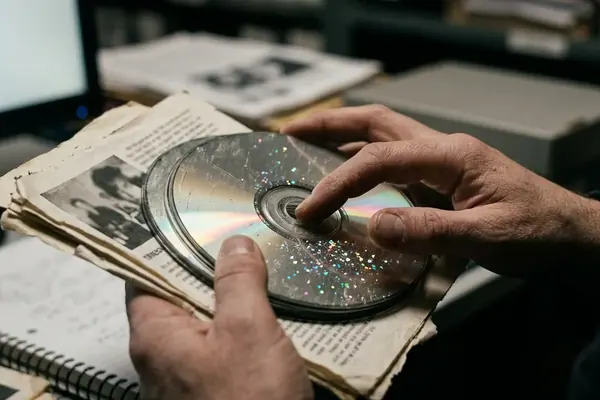
Digitization of a dozen high-resolution cover stories was completed between late 2022 and early 2023, with navigation routed to a centralized gallery index containing over 150 pages of archival scans. That preservation work matters because scans keep the original layout, captions, pull quotes, bylines, and editorial framing intact. A transcript can capture the words. A scan captures the media environment that shaped how those words were first received.
Go to the main 1997 gallery index next, then open the full-length Rolling Stone and Vibe cover story scans side by side and read them in publication order.