The 2001 Glitter press cycle did not begin with a movie poster. It began with a contract number that changed the temperature around every interview: $100 million.
For Mariah Carey, recording artist, the Virgin Records transition landed in public view in early April 2001, just as the industry was still learning how to cover pop stars in the new millennium. The money promised freedom. It also invited a level of scrutiny that made every outfit, quote, vocal choice, and studio rumor feel like evidence in a trial that had not been announced.
What's Inside:
- The Stakes of a New Millennium
- Criteria for Selection: Curating the Archives
- The Historic Virgin Records Transition
- Constructing the Billie Frank Persona
- The Physical Toll of the Media Spotlight
- Expanding the Cinematic Footprint
- Fashion, Tech, and High-Profile Romance
- Legacy of the Glitter Press Cycle
The Stakes of a New Millennium
A contract with a glare around it
The Virgin deal was not just a business headline. It arrived as a clean break from Sony Music, from the shadow of former husband and label chief Tommy Mottola, and from a late-1990s pop machinery that often treated Carey as both franchise and problem to manage.
That tension gave the 2000-2001 archives their charge: unprecedented creative room on one side, punishing attention on the other. Reporters wanted the comeback, the divorce subtext, the new sound, the film debut, the clothes, the romance, and the temperature in the room. Carey had to answer all of it while building an album and film around a character named Billie Frank.
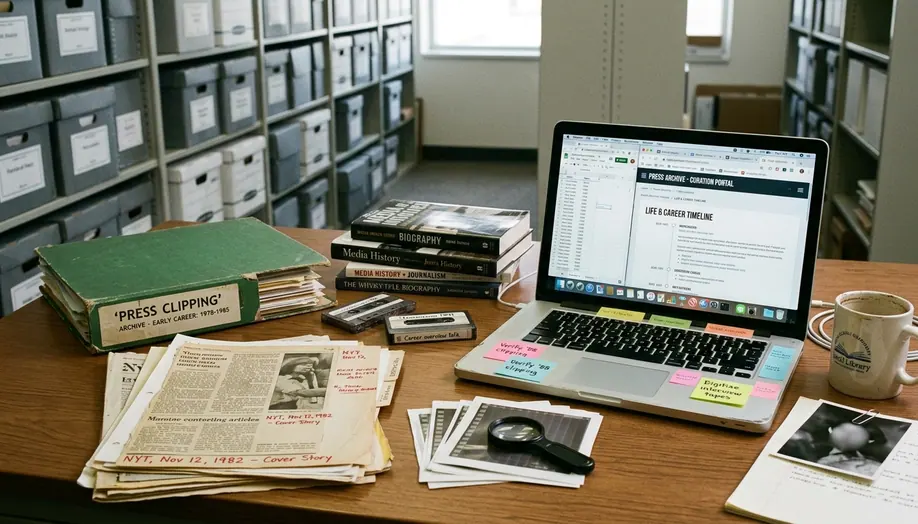
Read those pieces now and the tone feels almost physical. A question about a song could turn into a question about marriage. A note about a hotel room could become a verdict on discipline. The hook was always Mariah, but the real story was the pressure system around her.
Criteria for Selection: Curating the Archives
What made the cut
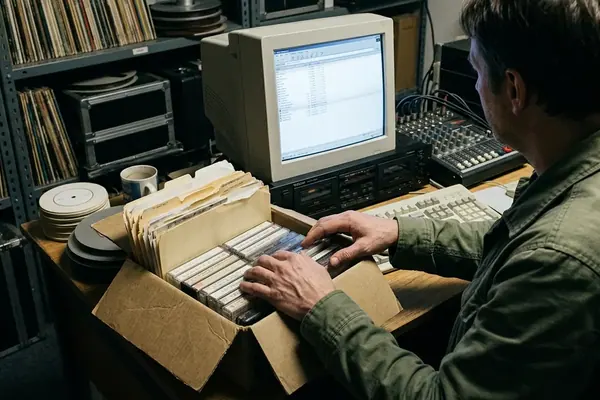
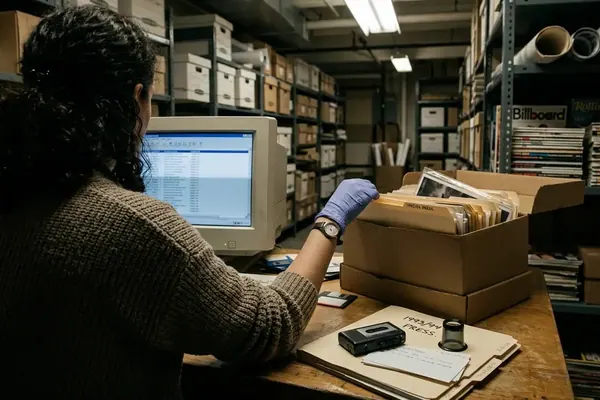
This archive pass focused on primary print interviews and contemporaneous broadcast moments, not later fan-forum reconstruction. That choice matters. Fan archives preserve emotional truth beautifully, but for this timeline, verification needed a tighter spine.
- Print interviews dated from February 2000 through October 2001, with emphasis on outlets such as Elle, Rolling Stone, and Allure.
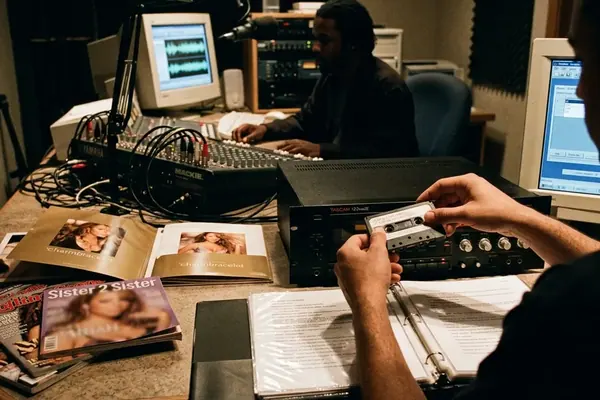
- Short broadcast segments from major music television networks, typically running about a minute or so.
- Key television appearances tied to MTV's 20th-anniversary coverage and TRL visibility.
- Press moments that showed a change in narrative, not just a repetition of the same promotional line.
The selection favors moments where Carey is doing something specific: explaining a studio decision, describing Billie Frank, managing a health question, or letting a lifestyle detail slip through. A humidifier in a hotel suite can tell you more about the grind than another broad quote about fame.
Field Note: The intensity of scrutiny shifted sharply by outlet. A music-focused interviewer might follow the production credits; a mainstream tabloid frame often chased mood, romance, and perceived instability.
1. The Historic Virgin Records Transition
From Sony gravity to Virgin velocity
The move from Sony Music to EMI/Virgin was a career reset with a public price tag. The contract valuation, reported at $100 million across a five-album commitment, made the transition impossible to treat as routine.
Studio sessions logged over the winter of 2000-2001 help explain why the shift sounded different before it was fully marketed as different. The sonic center was moving toward urban contemporary production and R& B texture rather than the clean architecture of traditional pop ballads. Music journalists noticed the turn, especially in the way Carey spoke about rhythm, collaboration, and atmosphere.
Lenny Kravitz's influence belongs in that conversation not because he single-handedly redirected the project, but because his presence signaled the kind of creative company Carey was keeping. The move was less about abandoning pop than widening the palette while the industry was still trying to file her under one category.
The business story underneath the music
The departure from Sony carried personal history. Mottola had been both husband and executive power broker, which meant every article treated the label change as biography, commerce, and liberation at once. That triple frame was heavy, and it shaped how the era was received before the public heard the full soundtrack.
2. Constructing the Billie Frank Persona
The Cinderella shape of All That Glitters
Before it became Glitter, the project moved under the title All That Glitters. The original phrasing was almost too on-the-nose, but it also captured the pitch: a young singer, a rough start, a stage-lit rise, and the emotional cost of getting what she thought she wanted.
Billie Frank's timeline was set specifically between 1982 and 1983, and that choice did real work. It moved the story into the club-glow edge of early-1980s pop, where disco's afterimage met drum machines, street style, and post-soul radio. The character followed what the press often treated as Carey's autobiographical Cinderella paradigm: hardship, discovery, transformation, applause.
The best part is that the music did not simply decorate the period. It tried to inhabit it.
The SOS Band feel and the Cameo spark
The lead single “Loverboy” pulled from a 1984 funk source associated with Cameo, with Larry Blackmon's unmistakable presence giving the record its rubbery, playful snap. In interviews, the soundtrack's direction often circled the SOS Band feel: glossy, percussive, flirtatious, and built for movement.
That was the concept at its strongest: not nostalgia as costume, but nostalgia as rhythm. Billie Frank made more sense when the beat did some of the storytelling.
3. The Physical Toll of the Media Spotlight
When promotion became the plot
The promotional rollout that began in mid-July 2001 ran for about two weeks, and the archive reads like a calendar tightening around her. Interviews, television hits, travel, styling, radio obligations, and film questions stacked on top of an album campaign that already carried a nine-figure headline.
Carey had described physical signs of stress in the press, including dermographia, the raised red welts that can appear on skin after pressure or scratching. It was a startling detail because it punctured the glamour frame. Suddenly the body was entering the story, not as image, but as evidence of strain.
Important: Misreading the roughly four-week release delay as a clever marketing pivot misses the documented sequence: the late-July 2001 hospitalization for exhaustion came first, followed by the postponed Glitter release.
Medical privacy laws restrict access to primary clinical records, so the timeline here rests on authorized publicist disclosures and contemporaneous journalistic observations. That limit is important. The record still shows a clear escalation from press demands to public health disclosure, and it shows how little room the media environment left for recovery without spectacle.
The lesson in the archive
The coverage did not merely report pressure. It helped create pressure. Every appearance became another chance to inspect whether Carey looked rested, sounded centered, or seemed sufficiently cheerful for the story reporters had already written.
4. Expanding the Cinematic Footprint
Not just Billie Frank
The 2000-2001 interviews show that Carey was thinking beyond one musical film. Glitter carried the promotional weight, but her acting ambitions had already started to move through smaller, more varied roles.
Her film debut came in The Bachelor, where she appeared as an opera singer alongside Chris O'Donnell. The production schedule for that project ran through the spring of 1998, giving her a first brush with film work before the scrutiny around a star vehicle arrived.
Then came Wisegirls, a comedy feature filmed over roughly a month in late 2000. As Rachel, opposite Mira Sorvino, Carey had room to play something more grounded and less mythologized than Billie Frank. The role mattered because it complicated the lazy assumption that her screen work could only mirror her pop persona.
A modern read on the acting arc
At the time, many profiles treated the move into film as a risk attached to ego. Looking back, it reads more like a working artist testing range in public, with uneven conditions and very little patience from the room. The comparison is useful: Billie Frank was an emblem; Rachel was a character.
5. Fashion, Tech, and High-Profile Romance
The Y2K material record
The archives are rich with objects. Prada mules. Louis Vuitton accessories. Motorola Two-Way pagers. Hotel-room humidifiers humming in the background like tiny stagehands.

Those details can look frivolous until they are cataloged together. Two-way pager use appears in four distinct interviews, a neat reminder that celebrity access had not yet become fully smartphone-shaped. Messages arrived in clipped bursts. Privacy felt possible, then not possible, often within the same afternoon.
The vocal routines were equally telling. Press accounts noted three to four humidifiers running simultaneously in hotel suites, a practical maintenance habit for a vocalist whose instrument had to survive interviews, travel, and performance demands. It is a better detail than any generic line about professionalism because it shows the labor without announcing it.
Romance as framing device
Interviewers including Mim Udovitch and Thomas Beller also had to decide what to do with Carey's high-profile relationship with Latin pop star Luis Miguel. Some framed it as glamour. Some treated it as emotional weather. The relationship became another lens through which readers were invited to interpret her mood, her independence, and even her artistic choices.
Bottom Line: The fashion and tech notes are not sidebars to the era; they are the texture that reveals how celebrity was being built, watched, and interrupted in real time.
Legacy of the Glitter Press Cycle
A time capsule with a changed verdict
The 2000-2001 press archive now functions as a time capsule of a career transition that was judged while it was still happening. At the center was Carey pushing into new label terrain, new film language, and a more urban R& B-forward sound. Around her was a media machine hungry for a downfall narrative because downfall made cleaner copy than transition.
Retrospective career writing published across 2021 through 2023 has reopened the period with more patience. A review of roughly a dozen long-form retrospectives from that window shows a broader willingness to separate the creative output from the frenzy that greeted it. That reassessment matters, especially for listeners who came to The Emancipation of Mimi first and then worked backward to understand the rupture before the rebound.
The Glitter era still carries its contradictions: expensive freedom, fragile health, ambitious genre play, uneven film reception, and a press corps that often mistook proximity for insight. It also contains the early outline of a survival narrative that fans now read differently, not as a detour from legacy, but as part of the route.
When the archive is laid out plainly, which should define the era now: the media narrative that crowded the frame, or the creative output that kept speaking after the headlines cooled?