What's Inside
- The Misunderstood Legacy of a Cinematic Pop Icon
- Criteria for Selection: Evaluating the Archive
- The Indie Revelation in WiseGirls
- The Dramatic Shift with Tennessee
- The High-Stakes Reality of American Idol
- Early Broadcasts and Commercial Foundations
- Final Takeaway: Redefining the Carey Canon
The Misunderstood Legacy of a Cinematic Pop Icon
A clean reading of Mariah Carey's acting career has to begin with an unpopular correction: it is unfairly defined by the 2001 release of Glitter.
That film did not arrive out of nowhere. The project had been conceived back in 1997, then shaped across the late 1990s before it entered active production. By the time audiences met it, the public story around Carey had already become bigger than the movie itself. The soundtrack, the tabloid cycle, the industry pressure, and the brutal timing all crowded the frame.
That is why the usual shorthand feels so thin. It treats her screen work as a pop-star vanity detour, when the more interesting record sits in smaller rooms: indie sets, live television pressure, character comedy, rougher dramatic material, and commercial work where she learned how to hold a camera without overplaying to it.
The real Carey screen legacy is not about whether a musical vehicle could carry the weight of a superstar narrative. It is about what happened when she was asked to shrink the glamour, listen across a scene, and let a character breathe.
Important: Relying solely on box office metrics fails to capture the cultural impact of limited-release independent films, especially when the performer at the center is already carrying a massive pop-media story.
That is the rewatch worth having. Not a defensive tour. Not a nostalgia rescue mission. A clearer look at a recording artist who often made her strongest screen choices when the spotlight was less forgiving.
Criteria for Selection: Evaluating the Archive
A chronological list would be tidy, but it would flatten the story.
This curation favors turning points: moments when Carey's on-screen persona changed, when production context mattered, or when a performance revealed something that the mainstream narrative missed. The archive behind that approach spans eras of media distribution, from early MPG, AVI, and WMV promo clips to VOB DVD-quality files encoded in 2006 and MOV files attached to specific releases, including the Nescafe version.
That matters because format is not just a storage footnote. A compressed promo clip can make a live read feel harsher than it played in the room. A cleaner VOB transfer can restore the small facial beats that get lost in fuzzy online copies. The preservation quality of early 1990s promotional clips varies heavily depending on the original regional broadcast standards.
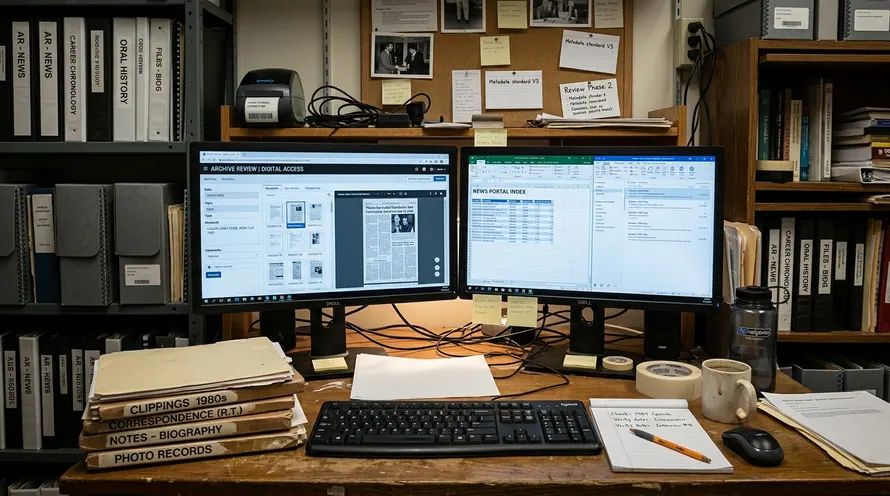
For production verification, film catalogs such as the American Film Institute catalog remain useful companions, but the heart of this list is editorial: key shifts over gross receipts, performance texture over publicity noise.
One qualifier belongs here. Some early material survives in better condition than other clips, so the strongest claims come from entries where production records, release context, and watchable footage line up cleanly.
The Screen Milestones Worth Rewatching
1. The Indie Revelation in WiseGirls (2002)
WiseGirls is the entry that most neatly breaks the lazy version of the story.
The 2002 character-based comedy placed Carey alongside Mira Sorvino in a smaller, sharper setting than the public expected from her. Directed by David Anspaugh and written by John Meadows, the film gave her room to work inside an ensemble rather than stand at the center of a spectacle. Johnny E. Jensen's cinematography and Linda Burton's production design shaped a world that felt lived-in, not lacquered.
That matters for Carey. Her best moments in WiseGirls are not built from diva scale. They come from timing, side-eye, tension, and the quick little shifts that make a character feel like she has a life beyond the line she is delivering.
The limited theatrical window in 2002 also helps explain why the performance never entered the broader pop memory the way it should have. Smaller releases often depend on timing, regional access, and critical oxygen. If a viewer missed it then, the later shorthand did the rest.
Field Note: Watch WiseGirls for what Carey does when she is not asked to sell Mariah Carey. The comic rhythm is drier, the posture is more guarded, and the performance gains force because she does less.
Historically, this is the modern interpretation that deserves more space: Carey was not avoiding acting discipline after Glitter. She was moving toward material that demanded it.
2. The Dramatic Shift with Tennessee (2007)
Tennessee belongs in the canon because it marks a deliberate pivot.
By early 2007, the project was in pre-production with workshops and character development sessions shaping the dramatic approach. Producer Lee Daniels' involvement gave the move added weight, not as a branding flourish, but as a signal that Carey was stepping toward a stripped-down kind of screen acting. This was not the high-gloss mode of a music video universe. It asked for wear, quiet, and emotional restraint.
The challenge was obvious: how does a globally recognized recording artist disappear enough for an indie drama to work?
The creative solution was to reduce the distance between performance and circumstance. Less polish. Less armor. More attention to what the character wants in a room where nobody is applauding. That is where Carey's dramatic instincts become easiest to see.
There is one catch to evaluating this pivot honestly: the unedited festival cut offers a better view of the dramatic shift than the more heavily recut commercial release. That distinction is not trivia. It changes how the work lands.
What Tennessee teaches is simple. A star image can be a useful engine for attention, but it can also block the audience from noticing patient, interior work. Carey was learning how to let the camera come to her.
3. The High-Stakes Reality of American Idol (2012-2013)
Reality television looks casual until the machinery starts moving.
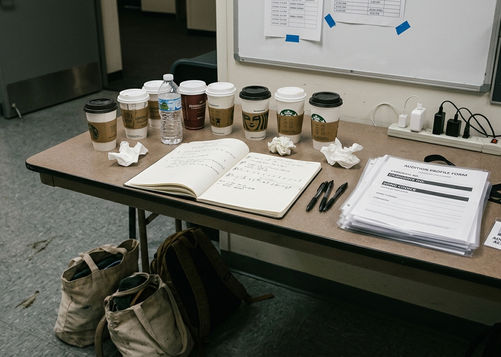
Carey's transition to American Idol during Season 12 put her under a different kind of pressure than film. The season premiered on January 16, 2013, after months of post-production, but the real test began earlier, with the Baton Rouge auditions in early October 2012. She sat alongside returning judge Randy Jackson and new judges Nicki Minaj and Keith Urban, entering a production environment that was already primed for conflict, reaction shots, and instant interpretation.
That is a brutal screen format. A scripted scene gives an actor coverage, blocking, rehearsal, and the mercy of editing shaped around story. A reality judging panel gives the camera permission to hunt.
Carey understood the hunt. She used stillness as control. She let silence do some of the work. At times, the most interesting performance was not in the spoken critique, but in the pause before it.
The Baton Rouge filming block required heightened logistics, including a police escort during the early October schedule. That detail says more than a gossip recap ever could. The set was not merely a workplace; it was a pressure chamber where celebrity, fandom, production demand, and network expectation collided.
Seen that way, American Idol is not a side note to her acting journey. It is a live-camera chapter in screen command.
4. Early Broadcasts and Commercial Foundations
Before the indie roles, before the reality panel, before The Emancipation of Mimi reset a pop era, Carey had already been training for the camera in plain sight.
Her early live television appearances show a performer learning how to read the room while the room is reading her. The 1990 NBA Finals appearance placed her in a national broadcast environment where presence had to register quickly. Her November 16, 1991 Saturday Night Live performance added another layer: live timing, stage marks, camera awareness, and the strange intimacy of performing to millions through a lens.
The commercial work matters too. A 1991 Sony MiniDisk commercial in Japan gave Carey a different kind of screen grammar, built around product, gesture, and crisp visual messaging. The 1994 Fresh Air Fund PSA asked for sincerity without melodrama, a difficult balance in a short charitable spot.
This is the historical thread many retrospectives skip. Commercials and PSAs can look minor beside feature films, but they teach economy. Every glance has to count. Every movement has a job.
That foundation later shows up in unexpected places, from the controlled glamour of M by Mariah Carey campaigns to the quick calibration required on televised music specials. Carey did not suddenly become comfortable on screen. She built that comfort through broadcast repetition, regional campaign work, and live performance demands.
Final Takeaway: Redefining the Carey Canon
The Carey screen canon needs a firmer center, and it should not be the most publicized misfire.
To understand Mariah Carey's artistry, fans and historians should look past the musical vehicles first and study the understated indie roles. Start with WiseGirls. Then move to Tennessee, with attention to the version being watched. After that, revisit American Idol not for the feud-cycle noise, but for the way she handles live-camera pressure when every reaction can become a headline.
WiseGirls proves the larger point. In a character-based comedy, Carey showed natural comedic timing and a dramatic depth that the mainstream industry too often overlooked. She did not need a film to orbit her celebrity to be interesting on screen; she was often better when the role asked her to serve the room.
Bottom Line: The strongest rewatch is not Glitter as apology or spectacle. It is WiseGirls as evidence.
Put WiseGirls at the center of the next Mariah Carey movie night, then use Tennessee and the Season 12 American Idol premiere as companion pieces. That is the sharper canon, and it is the one worth defending.