How do you follow the most successful modern Christmas album in history without sounding like you are decorating the same tree twice?
That is the real question behind Merry Christmas II You. The project could not behave like a routine seasonal release, the kind where a star walks through familiar carols and lets nostalgia do the heavy lifting. It had to answer a tougher brief: continue the festive world Mariah Carey built in 1994, but make it breathe like a 2010 studio album.
What's Inside
- Defining the Holiday Sequel
- Assembling the Production Trust
- The Art of Live Orchestration
- Vocal Architecture and Final Mix
- Capturing December in August
Defining the Holiday Sequel
Not a Covers Album in Disguise
A holiday sequel is a strange animal. In pop, sequels often mean branding first and music second. For Mariah Carey, that would have been a mistake. Her 1994 Merry Christmas had already established a sound: gospel lift, R& B phrasing, orchestral sparkle, choir-room warmth, and that particular sense of joy that feels huge without losing its human edge.
The early concept for Merry Christmas II You leaned toward a more standard compilation of public domain covers. That would have been safer, cheaper, and easier to explain in a meeting. It also would have missed the point.
The stronger move was to treat the record as a continuation of an aesthetic. That meant new arrangements, careful sequencing, and studio decisions that could sit beside the 1994 album without copying it note for note. The album needed to feel familiar before the listener could name why.
Bottom Line: The sequel worked as a design problem before it worked as a track list. The team had to preserve the emotional grammar of the first Christmas album while building a new recording with its own production clock, collaborators, and sonic weight.
Pre-production and conceptual planning stretched from early spring into late autumn 2010, with the official November 2, 2010 release date shaping the urgency. That date mattered. A Christmas album that arrives too late misses the early retail window, when listeners begin building the soundtrack for the season.
So the album became a timed operation: conceive the mood in spring, build the arrangements in summer, finish the vocals and mixes before autumn took over the calendar. December had to be manufactured months ahead of schedule.
Assembling the Production Trust
The Problem: Too Many Camps Can Blur the Center
Holiday records can turn disjointed fast. One producer hears sleigh bells and choir. Another hears a drum program. A third wants symphonic sweep. None of those instincts are wrong, but they can pull against each other unless someone keeps the album pointed at the same festive horizon.
That was the job of the collaborative infrastructure overseen by manager Chris Lighty. The setup linked Carey's Maroon Entertainment with Jermaine Dupri's So So Def Productions and Bryan-Michael Cox's Blackbaby Entertainment. On paper, that pairing looks like an R& B engine. In execution, it became a bridge between groove-based songwriting and traditional holiday arrangement.
Dupri and Cox brought fluency in contemporary R& B architecture: hook placement, rhythmic pocket, ad-lib space, and the kind of track logic that knows when to leave room for a lead vocal. The arrangers brought another discipline entirely. They thought in brass entrances, string movement, woodwind color, choir density, and the acoustic bloom that makes a Christmas record feel less like a playlist and more like a room.
The Solution: A Shared Holiday Aesthetic
The primary collaborative writing and beat-making sessions ran from mid-June through mid-August 2010. That period did not just generate songs. It established the album's rules.
- R& B rhythm could lead, but it could not flatten the holiday atmosphere.
- Orchestration could expand the frame, but it had to support Carey's phrasing rather than crowd it.
- Gospel energy could lift the choruses, but the record still needed clean pop readability.
- Nostalgia had to be earned, not sprayed over every bar like artificial snow.
Important: One catch with multiple R& B production camps is cohesion. Without rigorous executive oversight, the final product risks sounding like several strong sessions instead of one holiday album.
That tension is what makes the production trust interesting. The album was not built by choosing between modern R& B and classic Christmas form. It was built by forcing those languages into conversation until they stopped competing.
The Art of Live Orchestration
From Old-Hollywood Gesture to 2010 Studio Reality
Christmas pop has always borrowed from older musical theater and film traditions. Strings suggest snowfall. Brass announces celebration. Bells can turn corny in two seconds, but used with restraint, they still do a job no synth pad can replace.
On Merry Christmas II You, the orchestration mattered because the album could not rely only on programmed warmth. Arrangers mapped brass and string parts for a live symphony, aiming for mass, air, and acoustic depth. That choice gave the record a physical scale. You can hear the difference when a section breathes together instead of arriving as a preset.
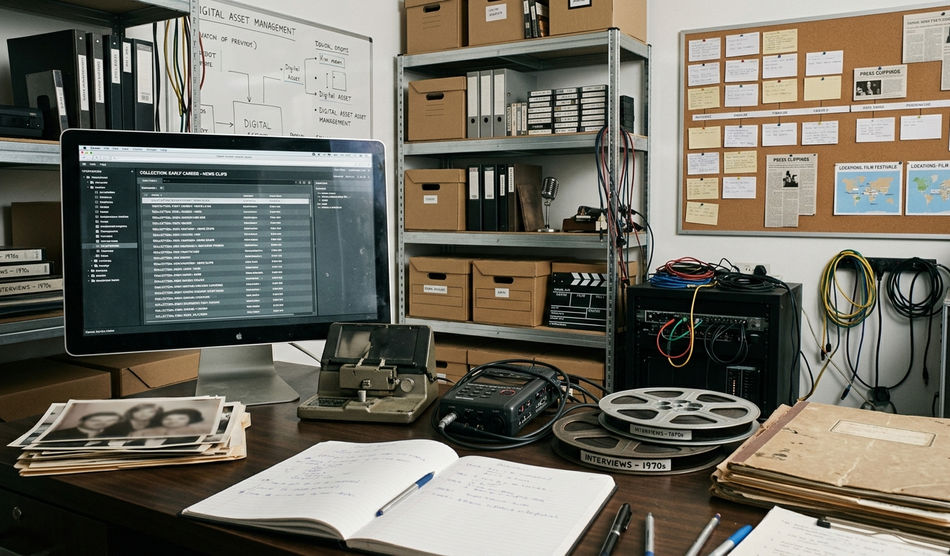
Marc Shaiman's role as writer, producer, and arranger brought theatrical intelligence into the project. That matters. Holiday music often needs a little drama, but not melodrama. Shaiman understands the lift before a downbeat, the comic brightness of brass, the way a string line can make a familiar chord feel freshly lit.
Brad Dechter, as orchestrator and arranger, helped translate that musical ambition into playable, balanced parts. This is where the romance of orchestration becomes practical labor. Someone has to decide which instruments double the melody, which voicings stay out of the vocal range, and where the arrangement should thin out so the lyric can land.
Capturing the Acoustic Mass
The orchestral tracking sessions took place over a concentrated stretch in late July 2010, using a 65-piece live orchestra. That number is not decoration; it changes the engineering problem. A large ensemble creates depth, but it also creates spill, phase issues, and a spectrum crowded with low-mid warmth.
Orchestra recording engineer John Richards had to capture size without turning it into fog. The goal was a massive acoustic sound, but mass alone is not music. The microphones needed enough room tone to feel grand and enough definition to let the arrangements move.
I tend to hear this album as a study in controlled abundance. It wants the room, the choir, the rhythm section, the brass, the lead vocal, and the whistle-register mythology all at once. The impressive part is not that the record is big. It is that the best moments know where to open a window.
Vocal Architecture and Final Mix
Layering Without Losing the Lead
Mariah Carey's background vocals are not background in the casual sense. They are architecture. They stack harmony, answer the lead, thicken emotional turns, and sometimes create a second song around the first one.
That architecture returned with longtime background vocalist Melonie Daniels, whose presence connects the album to a broader Carey vocal tradition. Daniels does not merely blend. She helps form the choral fabric around the lead line, the part of the sound that makes a Mariah Carey holiday chorus feel communal rather than solitary.
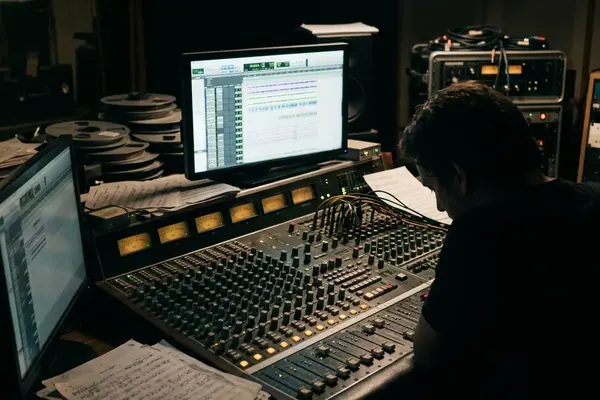
Recording engineer Brian Garten's task was precision under pressure. Engineers captured and layered up to roughly 48 individual tracks of background vocals per song at a specialized mixing facility. That kind of layering can produce shimmer, but it can also swallow the melody if nobody carves the space properly.
Field Note: The failure case is vocal wash: dozens of beautiful background parts blurring into one bright cloud and drowning the lead melody. The fix is not fewer ideas by default. It is sharper EQ placement, disciplined panning, and arrangement choices that leave the main vocal in command.
Phil Tan and the Final Polish
Final vocal comping and mixing ran through the first three weeks of September 2010. By that point, the album's pieces were on the table: live orchestra, R& B rhythm beds, stacked backgrounds, lead performances, seasonal textures, and the expectation attached to the Carey Christmas catalog.
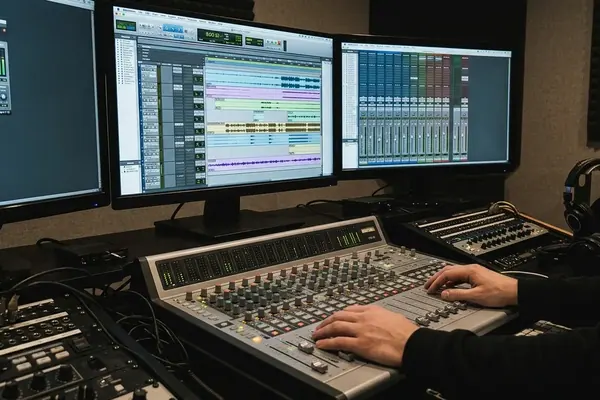
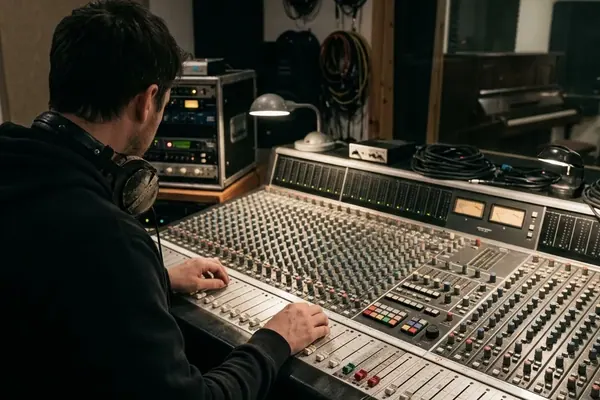
Mixing engineer Phil Tan had to make those elements coexist. At facilities such as The Ninja Beat Club, the work became less about adding shine and more about deciding what deserved the listener's attention at each second. The heavy live instrumentation needed body. The multi-tracked R& B vocals needed clarity. The lead vocal needed to feel close, even when the arrangement grew cinematic around it.
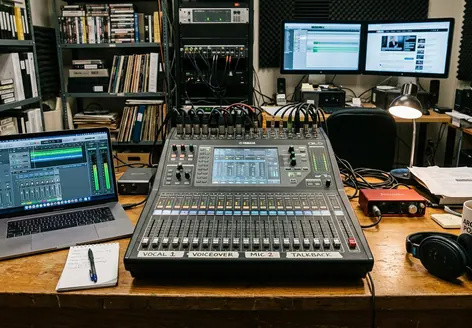
That is a mixing problem with musical consequences. If the strings sit too forward, the track becomes sentimental in the wrong way. If the drums dominate, the holiday frame thins out. If the backgrounds shine too hard, the lead loses narrative force.
The best mixes on a record like this feel generous. They let the orchestra glow, let the choir answer, let the rhythm section move, and still keep Carey's lead vocal as the emotional camera.
Capturing December in August
The Studio Floor, Late Summer
On August 27, 2010, the primary live band recording unfolded during a continuous session lasting close to 14 hours. That date gives the album a useful kind of reality. The sound may point toward fireplaces, church programs, department-store lights, and family kitchens, but the work happened in late-summer heat.
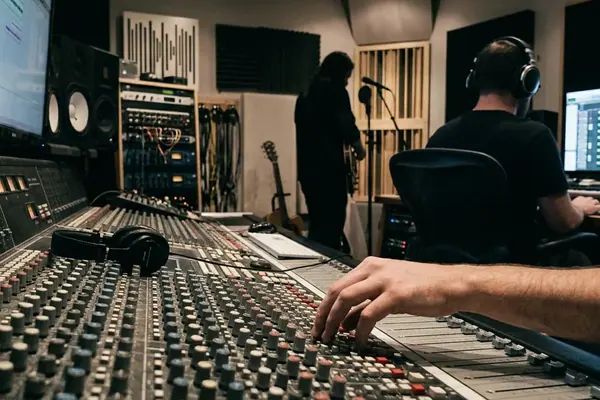
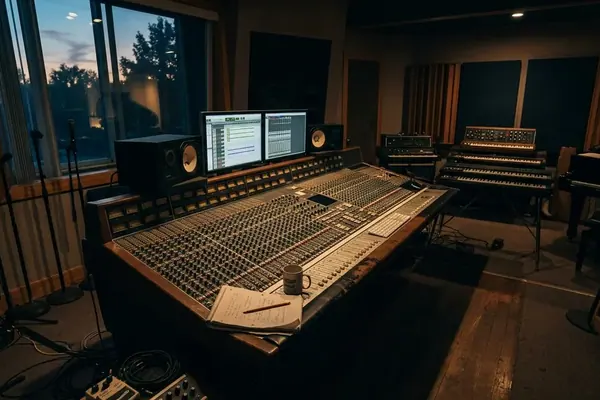
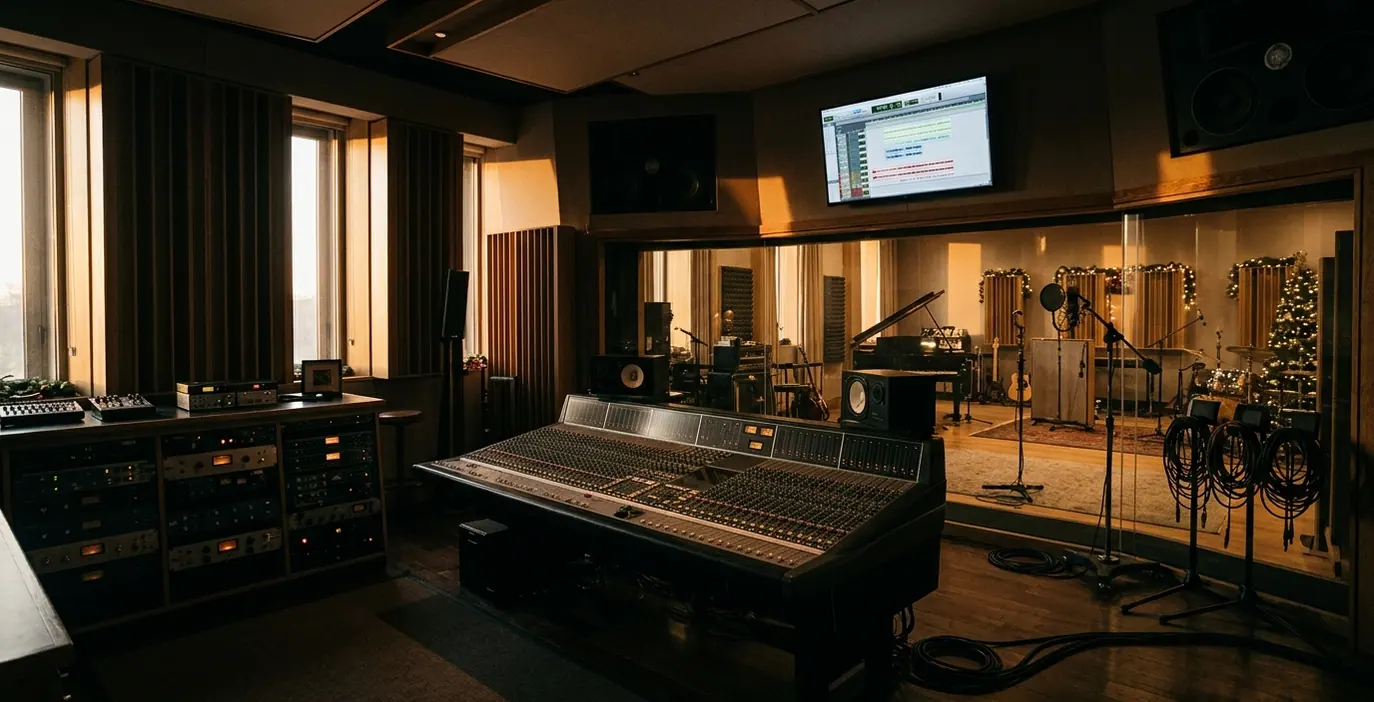
Picture the studio floor before the first serious take. Session musicians tune in clusters. A guitarist checks a small phrase and then stops. Brass players empty water keys. The drummer waits behind a partial wall of thick acoustic baffles, placed to control bleed between the rhythm section and the horns. Heavy metal sheet music stands hold charts that will turn into holiday brightness once the red light goes on.
The baffle placement was not decorative. It changed depending on which brass and rhythm instruments were being tracked at the same time. Too much isolation and the band loses feel. Too little and the microphones catch a messy version of the room. The sweet spot is physical, not theoretical.
This is where the holiday sequel becomes less mythic and more interesting. Somebody had to conjure winter with cables on the floor. Somebody had to count off another take while the calendar still said August. Somebody had to believe that a room full of musicians, paper charts, acoustic panels, and studio patience could make listeners feel December before December arrived.
Near the end of the session, a player leans over a stand to mark a change in pencil. The brass section settles. Behind the baffles, the rhythm section waits for the cue. Then the downbeat lands, and for a few minutes, late summer disappears inside the sound of Christmas.