Why Mariah Carey’s Brand World Resists Mass Appeal
Celebrity licensing often begins with a reach problem: how can a recognizable name attract casual buyers without asking them to know the underlying work? Mariah Carey’s brand architecture takes the opposite route. Its strongest physical extensions reward people who already understand the recording artist’s songs, eras, symbols, and glamorous sense of humor.
During early planning, the strategy team rejected a generic lifestyle proposition aimed at everyone. Core fans became the target because they could read a butterfly, a frosted lip, or a holiday ornament as part of a larger story. The restriction creates value—it turns familiarity with the catalog into a form of membership.
Products Built From the Discography
These objects function as physical manifestations of music. Merchandise drops align with catalog anniversaries through a 14-to-18-month development cycle, then move into direct-to-consumer retail channels where the surrounding editorial context can stay intact. I read that long runway as a practical safeguard: the product has time to connect with a specific musical era instead of merely carrying a famous signature.
Catalog Fluency First
A Carey product works best when a fan can identify the song, album, season, or visual motif before reading the packaging copy.
How M by Mariah Carey Gave Music a Scent
Fragrance offered a difficult translation challenge. A vocal run has movement and emotional tension, while perfume must express its character through ingredients that unfold on skin. The solution behind M by Mariah Carey was to map lyrical themes and personal memories to an olfactory profile.
Marshmallow, Tiare, and Memory

The final formulation incorporated toasted marshmallow and Tahitian tiare. That pairing matters because it avoids the flattened quality of a trend-led celebrity scent. Toasted marshmallow supplies warmth, sweetness, and an almost tactile softness. Tahitian tiare brings a floral note associated with a more expansive, tropical glamour. Together, they evoke the intimate and extravagant registers that frequently coexist in Carey’s music.
Development and testing ran over an extended period. That period allowed perfumers and creative directors to refine the memory cues rather than chase a single seasonal profile.
The Butterfly as Packaging Grammar
The butterfly motif connected the bottle to the visual identity Carey had established during the 1990s. It served as more than decoration. A fan encountering the package could trace a direct line from album imagery to the physical object, even before smelling the fragrance.
Here, scent carries the emotional atmosphere, while packaging identifies the musical universe. The two systems work together.
Turning Mariah’s Holiday Catalog Into Tangible Nostalgia
Mariah Carey’s holiday ventures begin with an unusually strong cultural asset: a music catalog already embedded in seasonal listening. Black Irish cream liqueur and luxury ornament collaborations give that listening ritual weight, texture, and a place on the table or tree.
A Product Line With a Calendar
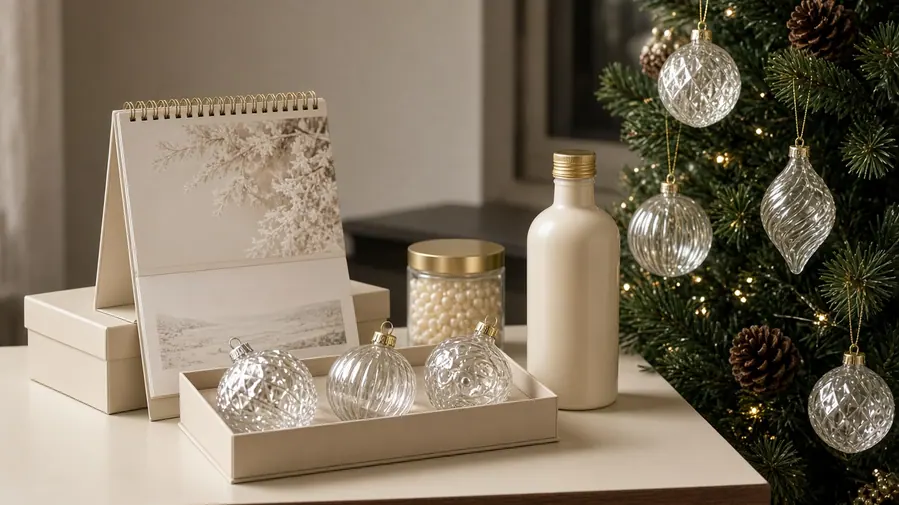
Merchandisers structured the seasonal lineup as a physical companion to the music. Custom-molded glass ornaments translate celebration into a collectible object. A signature cream liqueur formulation gives the same occasion a taste component. The retail distribution window, limited to mid-October through the end of December, concentrates both products inside the period when the soundtrack carries its greatest meaning.
The Closed Holiday Loop
The object prompts the music; the music deepens the object. Playing Carey’s holiday catalog while pouring a seasonal drink or hanging an ornament completes the consumer loop. Remove the soundtrack and some of the product’s specificity disappears.
This model relies on an established cultural association with a particular holiday. That boundary is important to the analysis: the method here covers physical merchandise designed for concurrent audio consumption, rather than every celebrity product carrying a seasonal theme.
- Music supplies context: the catalog defines the mood and occasion.
- Merchandise supplies ritual: pouring, gifting, collecting, and decorating create repeatable actions.
- Seasonality supplies urgency: the limited retail window keeps the products tied to their intended setting.
MAC Cosmetics Let Fans Wear a Mariah Era
The MAC Cosmetics collaboration translated the visual language of Carey’s 1990s album covers into wearable surfaces. Frosted metallic lip pigments, champagne glitter, and reflective packaging treated makeup as an extension of image-making rather than a detached beauty endorsement.
From Album Finish to Makeup Finish
The initial cosmetics production and packaging run spanned several months. Designers used that process to match color, finish, and material with recognizable musical eras. Champagne glitter captured stage light and polished glamour. Frosted lips recalled a period-specific beauty language. Metallic components made the package itself feel like an artifact from the same visual world.
Fragrance asks a fan to smell the atmosphere of a song. Cosmetics make the translation visible on the body. Someone wearing a frosted lip can participate in the aesthetic rather than simply displaying a logo.
Wear the Era
The collaboration succeeded conceptually because its shades carried visual memory. Each finish gave fans a practical way to restage familiar album imagery.
A Four-Phase Blueprint for Sensory Brand Extensions
The Carey model can be reduced to a working protocol for artists, publishers, and fan platforms developing physical merchandise. Brand architects codified successful launches into four phases, with an 8-to-12-week packaging design period reserved for synchronizing visual motifs with sonic signatures.
Map the Signature Before Choosing the Product
- Identify the unmistakable cue. Choose one sonic or visual signature that the audience already recognizes. Carey has the whistle register and butterfly motif; another artist might have a recurring piano chord, handwritten emblem, or particular stage color.
- Translate the cue into a physical sense. Decide whether smell, taste, or touch can carry the same emotional quality. Write the intended feeling first, then select the product category.
- Build a packaging bridge. Use typography, finish, shape, and color to connect the object with the original audio or digital presence. Protect 8 to 12 weeks for this phase so the package does more than hold the item.
- Test the audio loop. Place the finished object beside the intended recording. The relationship should become clearer when both are experienced together.
A Worked Candle-and-Song Extension
Consider an independent recording artist whose best-known ballad opens with rain against a window and a three-note piano phrase. Start by defining that opening as the core sonic signature. Translate it into touch and smell with a cool glass candle, a mineral rain accord, and a restrained wood note that echoes the piano.
Next, give the packaging a silver-gray finish and print the three notes inside the lid, using the same lettering found on the single artwork. Reserve the packaging phase to compare the physical sample directly with the cover and playback screen. Finally, place a card beneath the candle with one instruction: light it as the opening track begins. The flame appears, the rain texture enters, and the three piano notes reveal why the object exists.