Mariah Carey’s HSN Collection Put a Lifestyle Wardrobe on Television
A butterfly ring beside a pair of faux-fur-trimmed boots can look like concert merchandise when a resale listing supplies little history. That confusion sits at the heart of collecting Mariah Carey’s HSN line: the pieces carry familiar imagery, but they belong to a specific retail program.
Launched in late 2010 and expanded through 2011, the partnership brought footwear, fashion jewelry, apparel, and exclusive fragrance bundles into a televised lifestyle collection. HSN presented the products on air and fulfilled customer orders through its retail operation. Fans could encounter the recording artist, hear the product presentation, and purchase during the same broadcast.
The distinction matters. An HSN-exclusive gift set, a department-store perfume bottle, and a concert shirt can all bear Mariah Carey branding while carrying different production histories and collector expectations.
A Broadcast Slot Replaced the Department-Store Appointment
Traditional department-store distribution puts wholesale buyers between a collection and its audience. Buyers select merchandise, allocate floor space, and coordinate seasonal deliveries. The televised model connected product presentation directly to ordering and warehouse fulfillment, allowing several categories to share a selling event.
Licensing supplied the commercial framework for using the artist’s identity across those categories. HSN supplied the sales channel. The exact allocation of royalties, inventory exposure, and approval rights would require the underlying agreements; a broadcast alone cannot establish those terms.
I separate three questions when assessing this partnership: who supplied the product, where customers bought it, and what made that particular version exclusive. Keeping those questions apart prevents a television appearance from becoming an unsupported claim about ownership or manufacturing.
For corporate background, the U.S. Securities and Exchange Commission filings for HSN, Inc. provide a route into the retailer’s disclosures. Product-level authentication still requires the relevant listing, packaging, or broadcast record.
Boots, Butterfly Jewelry, and Wraps Built the Price Ladder
The assortment translated recognizable Mariah Carey wardrobe cues into products viewers could wear: padded-insole stiletto boots, crystal-embellished platform heels, oversized fleece wraps, and pavé butterfly costume jewelry. The butterfly supplied continuity across categories. Comfort details gave the footwear presentation something tangible to demonstrate.
Each category also served a different purchasing decision.
- Butterfly jewelry: a relatively accessible entry into the collection, with sparkle and recognizable imagery carrying much of the appeal.
- Fleece wraps and lifestyle apparel: pieces whose coverage, drape, and texture could be shown on camera.
- Boots and embellished heels: higher-commitment purchases requiring attention to fit, construction, and condition.
FlexPay Changed the Immediate Spending Decision
The pricing architecture placed costume accessories below more substantial footwear purchases. FlexPay divided eligible purchases into installments, reducing the amount collected at the initial transaction. That made it easier to combine categories during a broadcast without treating every purchase as an immediate full-price payment.
The installment amount and the total price answer different questions. A collector reconstructing original retail value should record the full merchandise price shown for the exact item, then distinguish any promotional offer from the regular catalog price. An isolated payment graphic can badly distort a resale comparison.
This approach positioned the collection between inexpensive mass-market accessories and more costly department-store purchases. Today, condition and documented identity matter more than the old payment schedule.
Inspect the Signature Alongside the Construction
For footwear, inspect the metallic script signature on the padded insole, then examine the lining, sole, heel attachment, and any surviving size or product labels. A worn stamp may require angled lighting. A clearly visible signature still needs corroboration from the shoe’s shape and construction.
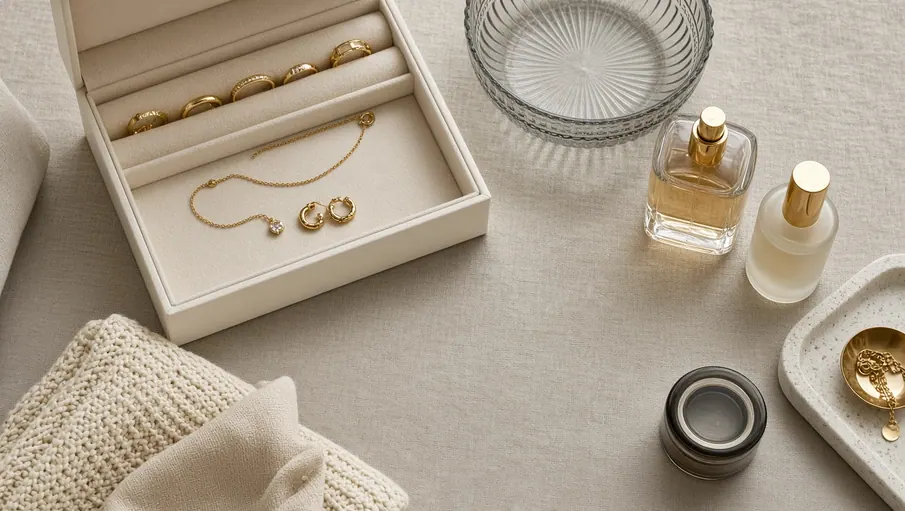
Jewelry requires category-specific inspection. A necklace or bracelet may retain a hangtag near its clasp; a butterfly hinge ring calls for photographs of the underside and mechanism. Treating every jewelry piece as though it should have identical tagging creates false negatives.
Read Beyond Foil
A script stamp is one matching feature. Build identification from the stamp, hardware, silhouette, and archived product view together.
Late-Night Call-Ins Made the Collection a Shared Fan Event
The Florida studio broadcasts offered something a static product page could not: Mariah Carey discussing products while viewers watched, called, and shopped. Extended appearances from St. Petersburg gave hosts room to rotate merchandise, revisit details, and take unscripted calls.
That format suited a fan audience already interested in her voice, humor, and personal style. A wardrobe anecdote could give a boot context. A conversation about staying comfortable at home could make an oversized wrap feel connected to the person presenting it.
Holiday Storytelling Connected Music and Merchandise
The launch period overlapped with the Merry Christmas II You promotional cycle. Seasonal shopping and holiday music therefore occupied the same cultural moment. The business logic was straightforward: viewers arriving for a Mariah appearance encountered giftable merchandise, while shoppers encountered the recording artist behind the name.
Compared with the album-centered identity of The Emancipation of Mimi, the HSN assortment invited a more domestic reading of her style. Boots, wraps, jewelry, and fragrance could move through a single conversation. Co-hosts handled product details and ordering cues while Carey supplied personal associations and reactions.
The result was a retail presentation with entertainment value—useful for keeping attention through repeated demonstrations and category changes.
Countdowns Turned Attention Into a Purchase Deadline
Countdown clocks, limited promotional windows, and sell-out banners gave viewers reasons to act during the appearance. A “Today’s Special” presentation could anchor the event around a featured offer, while inventory updates made availability visible.
Those signals deserve careful interpretation in an archive. A sell-out banner describes availability under that particular offer; it does not establish lifetime production or present-day rarity. Likewise, an on-screen promotional price should retain its broadcast context when entered into a collector’s catalog.
Save the whole screen whenever possible. The product, item identifier, price treatment, and surrounding broadcast information make a stronger record together than a cropped celebrity close-up.
HSN Exclusives, Elizabeth Arden Fragrances, and Tour Shirts Need Separate Records
A shared name does not make these commercial channels interchangeable. The HSN lifestyle line sold wearable products and curated bundles through television retail. The Elizabeth Arden fragrance portfolio included scents distributed through department stores. Concert and webstore apparel served another purpose: merchandise tied to performances, releases, or fan identity.
Identify the Object Before Assigning Its Channel
- HSN lifestyle garment: examine the woven neck label, fiber information, garment construction, and corresponding television listing. Satin labels with metallic borders and stretch-blend fabrics are useful clues within the described assortment.
- Prestige fragrance: record the scent, bottle, packaging, and batch information separately from any retailer-specific gift presentation.
- Concert or webstore apparel: inspect the graphic, event references, neck marking, and fabric. A printed cotton concert tee has a different construction profile from a draped lifestyle wrap.
Fabric weight helps when comparing like garments, but it cannot assign a sales channel by itself. Later capsule releases also need their own product evidence. A butterfly motif travels easily across collections.
The Fragrance Exclusive Could Be the Bundle
M by Mariah Carey, Luscious Pink, and Forever belong in a fragrance catalog with their individual identities intact. Where HSN offered an exclusive presentation, the distinction could reside in the combination of perfume, accompanying lotion, and collectible packaging rather than in a newly exclusive scent.
That distinction changes what a buyer should verify. A department-store bottle placed inside a television gift box does not automatically reconstruct the original HSN bundle. Inspect the bottle’s batch information, the contents, and the television item sticker together.
Boxes Travel Separately
Secondary-market sellers can reunite unrelated bottles and empty collector boxes. Outer packaging alone cannot establish an intact original broadcast set; check the base sticker and contents against the archived bundle description.
For cataloging, maintain separate fields for product identity, retail channel, and bundle contents. “Forever perfume; HSN gift presentation; lotion missing” preserves more useful information than a broad “rare Mariah exclusive” label.
Work Through a Butterfly Ring and Faux-Fur Boot Lot
Consider an illustrative secondhand listing containing faux-fur-trimmed stiletto boots and a crystal butterfly hinge ring. The seller calls them “VIP tour merchandise.” No receipt appears in the photographs. Here is a complete workflow for deciding what the lot contains and how to approach its price.
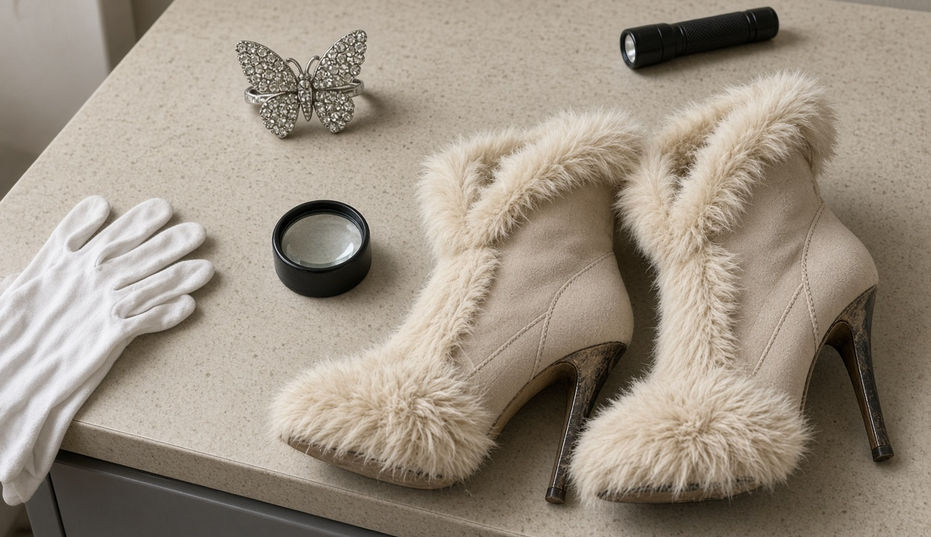
- Request the missing views. Ask for both insoles, both outsoles, the boot labels, heel tips, cuff seams, and the ring’s underside. Request a photograph of the hinge open and closed. Keep the seller’s original description with the images.
- Inspect the physical markers. Locate the gold-foil script insole stamp and examine the padding. Compare the outsole tread, heel profile, and faux-fur cuff stitching with the candidate archived boot. On the ring, inspect the dual-shank spring hinge, stone settings, and surrounding metal for repairs.
- Find the corresponding broadcast item. Search the late-2010 and 2011 material for the matching silhouette and hardware. Transcribe the six-digit HSN item number exactly when visible. A matching number format alone proves little; the identifier must resolve to the same product.
- Establish the seasonal attribution. For the suspected winter boot, compare the cuff, heel, sole, and color with the archived November 2010 presentation. Record “season unconfirmed” if the available image cannot resolve those details. Identify the ring independently rather than assuming both pieces came from the same broadcast.
- Build separate condition records. List sole wear, heel-tip wear, lining damage, missing crystals, hinge tension, and plating loss. Check inside the boots as carefully as the exterior. Attractive uppers can conceal deterioration.
- Calibrate against completed sales. Find sold examples of the identified boot and ring, prioritizing comparable condition and completeness. Separate asking prices from realized prices. Record the original broadcast price as historical context rather than treating it as today’s resale value.
- Set the lot ceiling. Add the condition-matched resale benchmarks, subtract documented repair costs and your transaction costs, and remove any premium attached solely to the unsupported VIP description. Save the calculation before bidding.
For this worked case, assume the archived product views and identifiers match both objects, the boots show heel-tip wear, and the ring retains its stones with a functioning hinge. Relabel the record “HSN lifestyle boots and butterfly hinge ring,” attach the matching screenshots, and obtain a heel-tip replacement quote. Enter each item’s comparable sold price in your worksheet, deduct that quote and checkout costs, then use the remainder as your maximum merchandise bid. If the seller’s price exceeds that ceiling because of the tour claim, send the documented offer at your calculated ceiling and leave the unsupported premium out.