What happens when the world's biggest pop vocalist hands over her pristine lead single to the most unpredictable member of the Wu-Tang Clan? In 1995, that question stopped being theoretical the moment Mariah Carey put "Fantasy" in the hands of Ol' Dirty Bastard. I still read that pairing as one of the sharpest chart-era gambles of the decade: a recording artist at peak commercial power inviting chaos into a format built to keep chaos out.
What's Inside
- The 1995 Question That Changed Pop Music
- Breaking the R&B and Hip-Hop Boundary Lines
- Structural Genius Over Superficial Features
- The Blueprint for a Generation of Crossovers
- Stop Treating the Remix as an Afterthought
The 1995 Question That Changed Pop Music
Mainstream pop in 1995 ran on segregation. Pop got the glossy single. Hip-hop got the street mix, if it got anything at all. Carey and her production team refused that script. Instead of hiring a safe, established R&B crooner for the remix, they solicited a raw, unpredictable hip-hop verse and forced a collision.
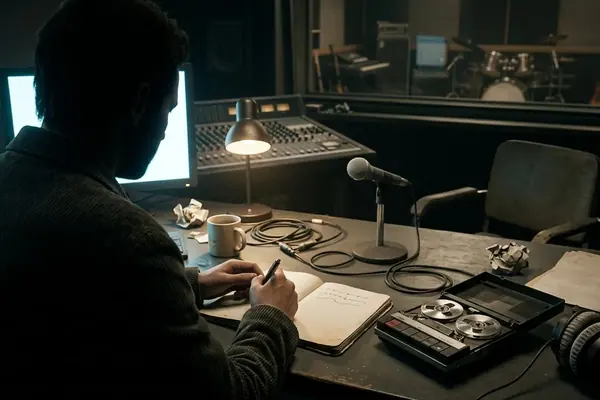
The sessions tell you how serious they were. Late-night vocal tracking across a single week in August 1995 merged pristine whistle-register stems with unquantized, gritty hip-hop ad-libs. That week of work did more than dress up a hit. It rewired the hit.
I treat the Bad Boy remix of "Fantasy" as a structural earthquake. Labels, radio programmers, and artists had to rethink genre-blending after it stuck. The Emancipation of Mimi would later prove Carey could still dominate a new century; this remix proved she could redraw the map that century would use.
Breaking the R&B and Hip-Hop Boundary Lines
Before "Fantasy," pop and hip-hop lived in enforced silos. Daytime Top 40 clocks protected adult-contemporary comfort. Urban and rhythmic stations guarded their own lanes. Mid-90s Billboard methodologies and radio formats rewarded that rigidity. New Jack Swing had already flirted with hybrid energy, yet raw rap rarely sat on a pop diva's lead single without being sanded down first.
Carey hit resistance immediately. Executives pushed to service the standard pop mix exclusively. She intervened and demanded the hip-hop version reach urban radio programmers at the same time. That demand mattered. A promotional cycle running roughly two months through the fall of 1995 tracked crossover spins across strictly segregated regional markets, and the willingness of those programmers to air a rap-heavy cut in daytime pop blocks became the real test.
Format Fracture Point
When a lead single forces urban and Top 40 desks to share the same record in the same week, the old silo logic starts to fail in public.
The industry did not volunteer this experiment. Carey dragged it into the open.
Structural Genius Over Superficial Features

Most remixes fail because they are decorations. A 16-bar verse lands on an unchanged instrumental, the star keeps the original vocal take, and the record sounds like two songs arguing. The "Fantasy" remix works because the architecture changed first.
Producers stripped the original down to its core sample and built a new drum architecture around it. They lowered the instrumental BPM to carry a heavier bassline and drum loop. Carey re-sang the entire arrangement to match that groove. Fresh background vocal stems went down during a studio lock-in that ran close to two days. Sean "Puffy" Combs did not paste hip-hop onto pop cosmetics; he rebuilt the floor, then asked the vocalist to walk it again.
O.D.B. is not a cameo bolted to the bridge. He opens the record, cuts through the middle, and stays in the outro. The track behaves like a duet with unstable voltage. That integration is the point. One catch remains obvious to anyone who has sat in those sessions: completely restructuring a pop track around a hip-hop sample demands a singer with the technical agility to re-cut a full lead without drowning under heavier production. Carey had that agility. Plenty of later attempts did not.
Rebuild The Floor
If the drums, tempo, and lead vocal stay frozen while a rapper drops in, you have a feature credit. You do not have a remix with a spine.
The Blueprint for a Generation of Crossovers
Through the rest of the 1990s, the industry watched rap features migrate onto pop lead singles and measured how rhythmic programming blocks absorbed them. The "pop star plus rapper" formula hardened into default hit strategy. Carey had already written the operating manual.
Rock/rap precedents such as Aerosmith and Run-D.M.C. proved genre collision could sell. They did not establish the specific pop-diva-and-hip-hop-MC template that dominated the next two decades of chart pop. That template starts here: a female pop superstar, a street-facing MC, a rebuilt rhythm bed, and simultaneous multi-format servicing.
Radio had to move. Programmers manually adjusted daily rotation clocks and dropped the hybrid into daytime slots once reserved for traditional pop and adult contemporary ballads. Format walls did not vanish overnight. They thinned where the record forced contact.
The lineage is audible every time a lead pop single arrives with a fully integrated rap verse instead of a bonus-disc afterthought.
Stop Treating the Remix as an Afterthought
Contemporary A&R teams too often treat the remix as a streaming patch. A trending rapper's verse gets digitally spliced into a pre-existing bounce. The collaboration becomes a post-production optimization tactic, then disappears. Engagement on those modern remixes frequently drops within a few days of release. Isolated vocal-stem drops from recent years look thin next to fully re-produced studio sessions built the way Carey built "Fantasy."
Paste a 16-bar verse onto an unchanged pop instrumental and you get a disjointed track that slides off streaming charts after a week or so. That pattern is now familiar enough to feel like policy. It is also a waste of the form.
Legacy Over Bump
A crossover earns catalog life when the beat, the vocal, and the feature are written as one record—not when the feature is a late marketing attachment.
Labels and artists should stop commissioning disposable splices and start commissioning rebuilt records. Treat the remix as a distinct piece of musical architecture: new drums, re-sung leads, a featured voice woven through the full runtime, and a promotional plan that services formats together instead of in polite sequence. If you want a crossover with legacy rather than a momentary chart bump, build it from the ground up the way Mariah Carey built the "Fantasy" remix in 1995. Anything less is just traffic management dressed up as collaboration.