When the Studio Became a Sandbox: The Genesis of the Modern Crossover
Why do today’s dominant collaborations sound as though someone reopened a mid-1990s recording session?
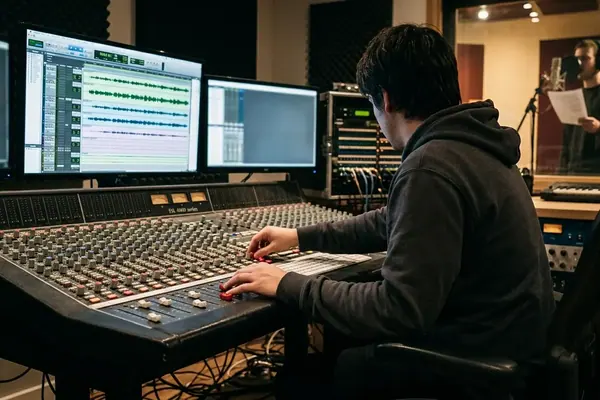
The answer begins with a change in who controlled the room. Across the mid-1990s, roughly from 1995 into 1997, producers increasingly bypassed traditional A&R matchmaking and invited hip-hop artists directly into late-night sessions. Studio blocks running from 10:00 p.m. to 4:00 a.m. gave singers, rappers, producers, and engineers space to work beyond the immediate presence of label executives.
That setting changed the character of the crossover. A conventional pairing often divided the song into assigned territory: the lead vocalist carried the composition, then the guest arrived for a self-contained verse. The late-night model encouraged everyone to react to the same beat, rewrite transitions, test harmonies, and shape the record together.
Mariah Carey’s early crossover projects helped establish this artist-driven approach as a serious creative form. She retained the precision expected of a pop and R&B recording artist while allowing hip-hop rhythm, phrasing, and attitude to alter the song’s structure. Her vocal identity remained intact. The surrounding record became more flexible.
That distinction matters. Genre blending works when both musical languages affect the finished track. A pasted-on feature supplies an extra voice; an integrated collaboration changes where the chorus lands, how the groove breathes, and what the lead singer does while the guest occupies the foreground.
The Crossover Test
Listen for structural change. If removing the guest would force the producer to rebuild transitions, backgrounds, or rhythm, the collaboration reached deeper than simple verse-trading.
Carey’s model treated the studio as a shared sandbox. That freedom produced a blueprint later artists could revisit without imitating a single song.
Vocal Architecture: Engineering the Perfect R&B Blend
The easiest duet to hear can be the hardest one to build.
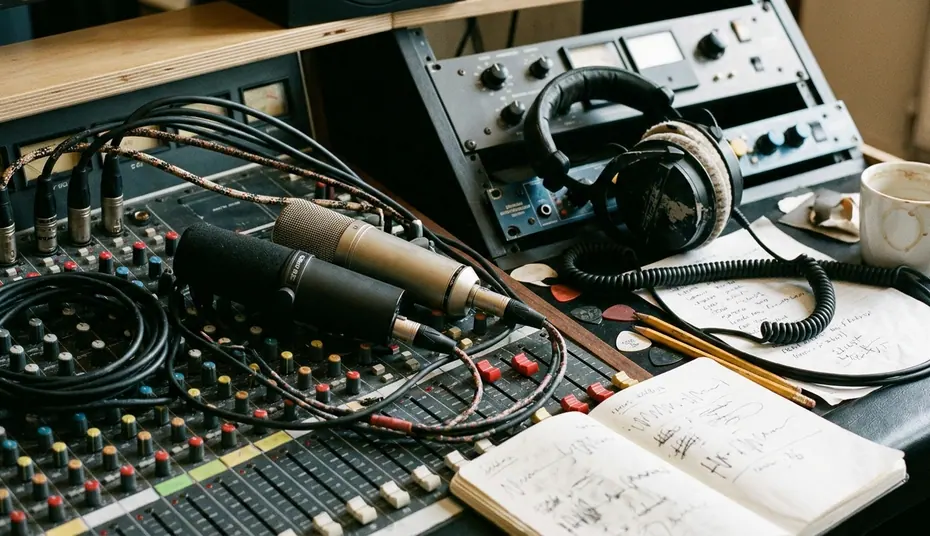
Carey’s collaborative arrangements relied on small vocal decisions that disappear into the whole: exchanged melismatic runs, tightly stacked backgrounds, and whisper-register lines placed beneath a guest performance. Engineers rejected the common practice of saving ad-libs for the outro. Instead, they threaded those textures through the featured verse so the lead vocalist remained present even when another performer took the narrative focus.
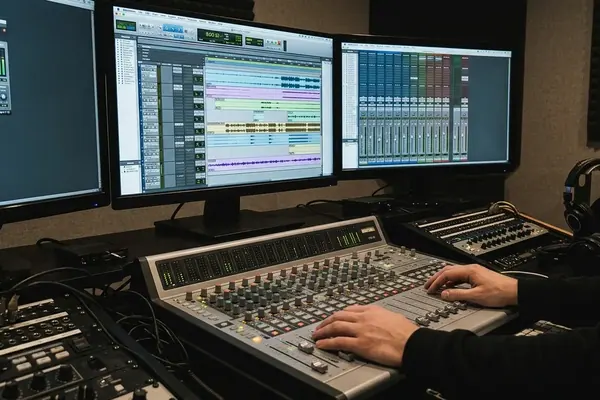
A complex background arrangement could require 12 to 16 distinct vocal tracks. Dedicated comping then occupied approximately 48 to 72 hours as engineers selected syllables, aligned entrances, balanced breaths, and preserved enough variation to keep the stack human. Pitch matching alone could not complete that job. The blend also depended on compatible vowel shapes, controlled dynamics, rhythmic agreement, and deliberate placement within the stereo field.
Standard vocal pedagogy helps explain the difficulty. Two singers may produce the same written pitch while emphasizing different resonances or attacking the note from different positions. Stack those performances without careful direction and the chord sounds cloudy. Shape the vowels together, stagger selected entrances, and assign each line a distinct function; the listener hears width instead of congestion.
This is where modern pitch correction reaches its practical limit. Software can tighten an unstable note or adjust timing, yet it cannot invent the responsive phrasing created when one vocalist hears another and changes the next run. Organic blend starts during performance. Editing clarifies it afterward.
I listen first to the space underneath the guest. A faint whisper line, a held harmony, or a delayed answer often reveals more collaborative intent than the loudest run in the chorus. That is the core of a melismatic whisper-register stacking analysis: follow the supporting vocal as carefully as the featured one.
The Remix as a Trojan Horse: How Dual-Format Rollouts Changed the Playbook
Once the studio produced a genuine crossover, the release plan had to preserve its edge.
The remix became the delivery system. Marketing teams sent the hip-hop collaboration to urban radio programmers at the same time the primary pop single entered its own lane. This dual-format push let one composition present different points of entry without flattening either audience into a generic middle.
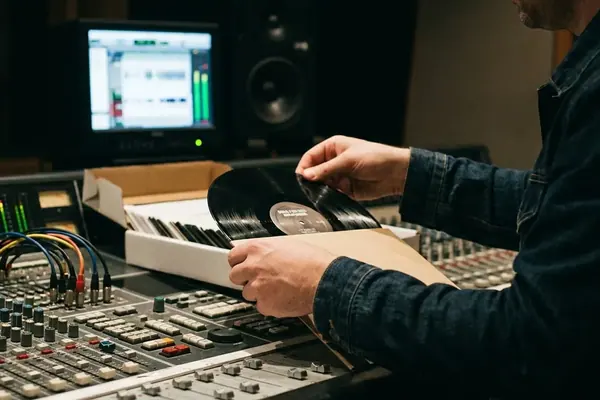
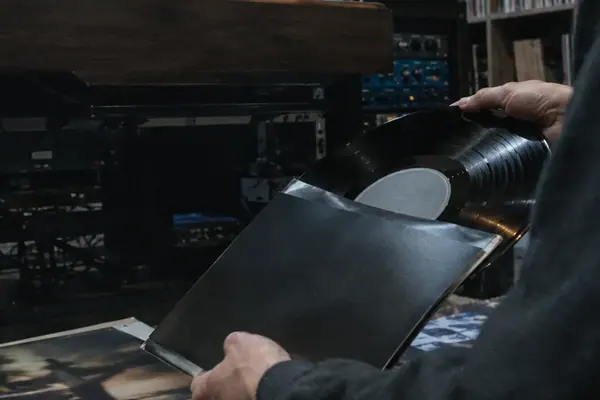
Street-level DJs received exclusive heavy-weight vinyl pressings. The promotional window ran in the range of 14 to 21 days, creating a concentrated period in which club play, DJ response, urban programming, and the primary pop release could reinforce one another. Physical format mattered because the remix reached the people who could test it in a room before broader exposure took hold.
The pairing itself carried a productive tension. Carey brought established pop visibility and exacting vocal arrangements. A hip-hop collaborator brought another rhythmic vocabulary and a closer connection to street-level circulation. When both contributors reshaped the track, the release could move across formats while keeping distinct versions purposeful.
Why the Remix Had to Feel Complete
A remix built around this strategy needed its own internal logic. New percussion might change the vocal pocket. A guest verse could require a revised pre-chorus, fresh backgrounds, or a shorter opening. Even Carey’s ad-libs had to respond to the new arrangement rather than float above an unchanged master.
For analysis, I would confine the remix evaluation strictly to dual-format radio pushes. Club mixes designed only for dance-floor extension answer a different question. Here, the useful comparison is between the primary pop single and the hip-hop collaboration released alongside it: who received each version, what changed musically, and whether those changes justified separate programming paths.
Echoes in the Booth: Why Today’s Artists Are Reopening the Vault
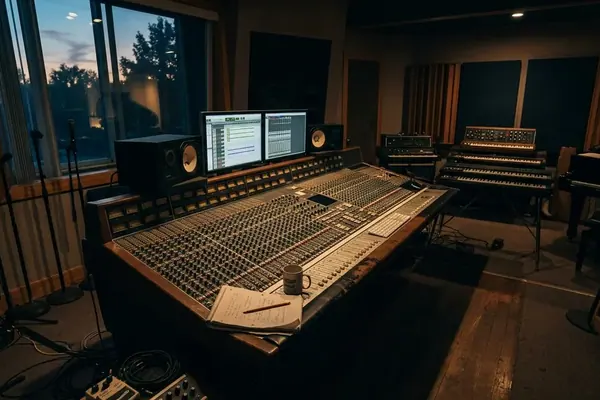
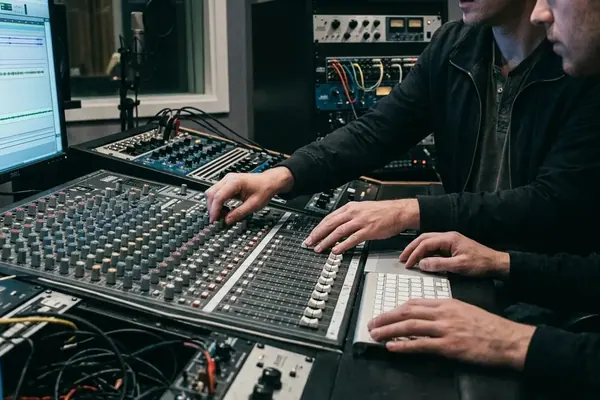
In the early 2020s, contemporary vocalists renewed their interest in shared physical recording spaces. They coordinated schedules, tracked parts at the same time, and routed vocal feeds through vintage analog mixing consoles to recover the warmth associated with 1990s sessions.
The equipment supplies only part of the effect. Simultaneous recording lets performers adjust in real time. One singer pulls back after hearing the guest add grit. The guest leaves an extra beat open because a harmony is beginning to bloom. Those decisions create chemistry at the level of phrasing, where a plug-in has little authority.
The returning sung chorus in hip-hop fits the same pattern. A strong melodic refrain does more than divide verses. It gives the featured vocalist a recurring dramatic role and creates material for harmonies, countermelodies, and call-and-response. Raw vocal chemistry then becomes part of the production rather than decoration placed over it.
Modern music journalism and pop-history commentary often connect these star pairings to the crossover architecture Carey helped define. The resemblance is clearest when the lead singer remains active beneath the guest, the guest alters the groove, and the release strategy addresses more than one radio audience.
- Shared room: The performers respond to each other during tracking.
- Sung anchor: A melodic chorus connects contrasting verses.
- Analog routing: The vocal feed passes through a vintage console for tonal warmth.
- Mutual adaptation: Both artists change phrasing or arrangement choices.
This revival succeeds through process. The old lesson remains useful because it asks performers to listen before the engineer begins repairing anything.
Analyzing the Mix: A Two-Pass Listening Guide for Modern Duets
A focused evaluation takes one song and asks two questions: How are the voices connected, and how deeply does the guest alter the genre balance?
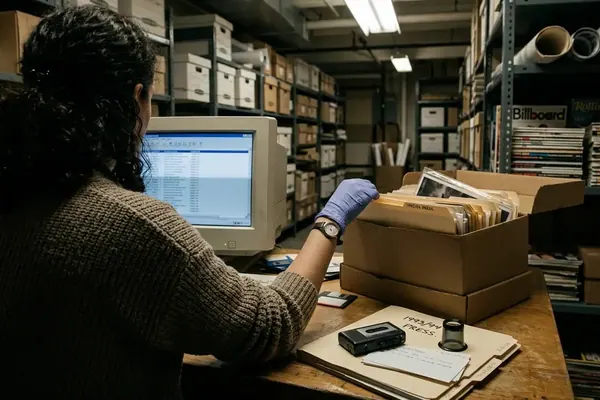
Archival multi-track work shaped this framework. By isolating vocal stems, historians could distinguish genuine harmonic integration from parts that merely occupied adjacent sections. The method works best when the guest delivers a melodic or harmonized verse; traditional spoken-word rap features sit outside its intended scope.
-
Isolate the Vocal Arrangement
Use the center vocal channel during a three-to-five-minute listening pass. Begin with the first 30 to 45 seconds of the guest feature. Write down every moment when the lead voice remains audible: stacked chords, whispers, held notes, doubled phrases, answers, or traded melismas.
Then classify the arrangement. Simple verse-trading means one performer stops while the other begins. Harmonic integration means their parts overlap with a clear musical relationship. Note whether the overlap supports the guest, competes for attention, or creates a third texture that neither voice supplies alone.
-
Measure the Guest’s Effect on the Groove
Compare the guest section with the preceding chorus or verse. Listen for changed percussion, a different rhythmic pocket, altered bass emphasis, shortened transitions, or newly placed backgrounds. The central question is whether the guest transforms the song’s movement or simply performs over the existing beat.
A Worked Listening Pass
Take a hypothetical four-minute R&B single with a melodic guest entering at 1:40. Start the timer at 1:40 and listen through 2:20. On the first pass, mark the lead singer’s whisper double under the guest’s opening line, a three-part harmony on the final word of the next phrase, and a traded run leading into the chorus. Score the arrangement as harmonically integrated because both voices share musical material.
Restart at 1:30. The original verse uses clipped drums and a restrained bass line. At 1:40, the kick pattern opens, the bass gains movement, and the lead vocalist’s backgrounds answer the guest between phrases. Mark the genre integration as structural: the feature changes rhythm, vocal density, and the route back to the chorus.
Finish with one clean verdict: “This duet earns its billing because the guest changes the groove while the lead voice builds a harmonic frame around the performance.” In this pass, that verdict rests on two observations and nothing more: the whisper double sitting beneath the guest’s opening line, and the kick pattern that opens the moment the feature begins.