What's Inside
- Co-Writing 'Emotions' in the May 1991 Sessions
- TR-909 Grid, Gospel Piano, New Lead Vocals
- The 4:09 Cut Beside the 5:50 Club Mix
- Ten Minutes and Fifty-Four Seconds of 'Anytime You Need a Friend'
- Album Cut, Then Club Mix, in One Queue
Co-Writing 'Emotions' in the May 1991 Sessions
The May-to-July window in 1991 still reads, on the credits, like a writing camp. Mariah Carey and her management brought David Cole and Robert Clivillés into the sophomore sessions while the album was being built. They co-wrote and co-produced 'Emotions' from scratch. A standard major-label campaign would have waited until the masters were locked, then commissioned dance versions from outside remixers. That route was set aside before a note of the title track was finished.
Those months yielded four co-produced album tracks. The 12-inch promotional vinyl singles came out of the same run.
I put the club mix on before the LP cut when I want the kick drum in the room with the melody. Dance mixes from that decade get filed as disposable promo, waved through a meeting and forgotten. The lead vocal on the C+C side will not sit in that file. Carey cut gospel-infused lines written against the remix tempo, as if the club version were its own composition. Phrasing, breath, and the length of the vamp all belong to that tempo.
Finding the performance on a streaming service takes a long scroll. Services sort the 2020-to-2024 remastered single EPs beneath compilation and deluxe album tabs. Listeners move past 40 to 60 releases before the full-length 12-inch club mixes appear. Recent coverage of her catalog and chart history rarely leads with those sides. They sit under the album sequence, easy to treat as extras. They are the tracks where she set a method she would keep: new lead vocals for the dancefloor, gospel weight included, sung to the groove instead of pasted over a finished chorus.
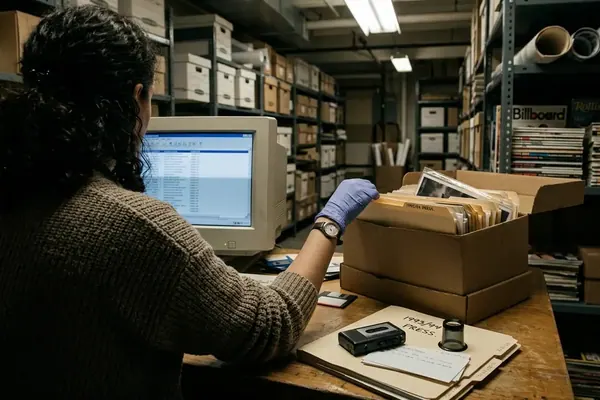
In her career timeline, mid-1991 is the turn where dance production moved upstream into the writing credit. Press archives of the promotional vinyl show Cole and Clivillés in the song, on the writer and producer lines, present for the session that made the record.
TR-909 Grid, Gospel Piano, New Lead Vocals
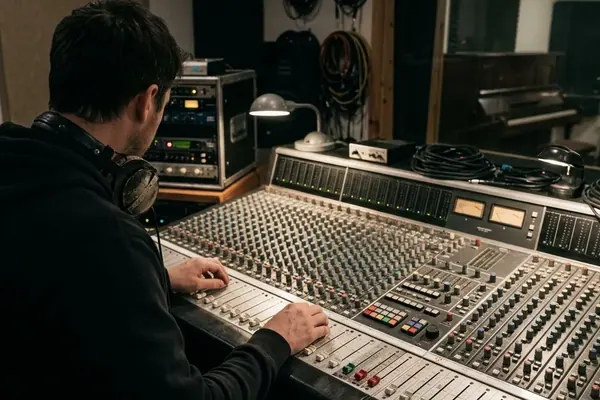
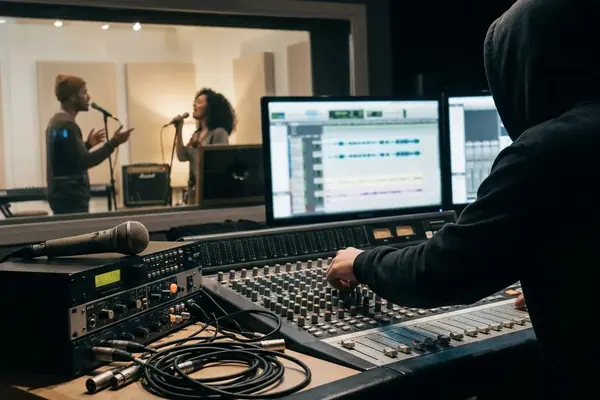
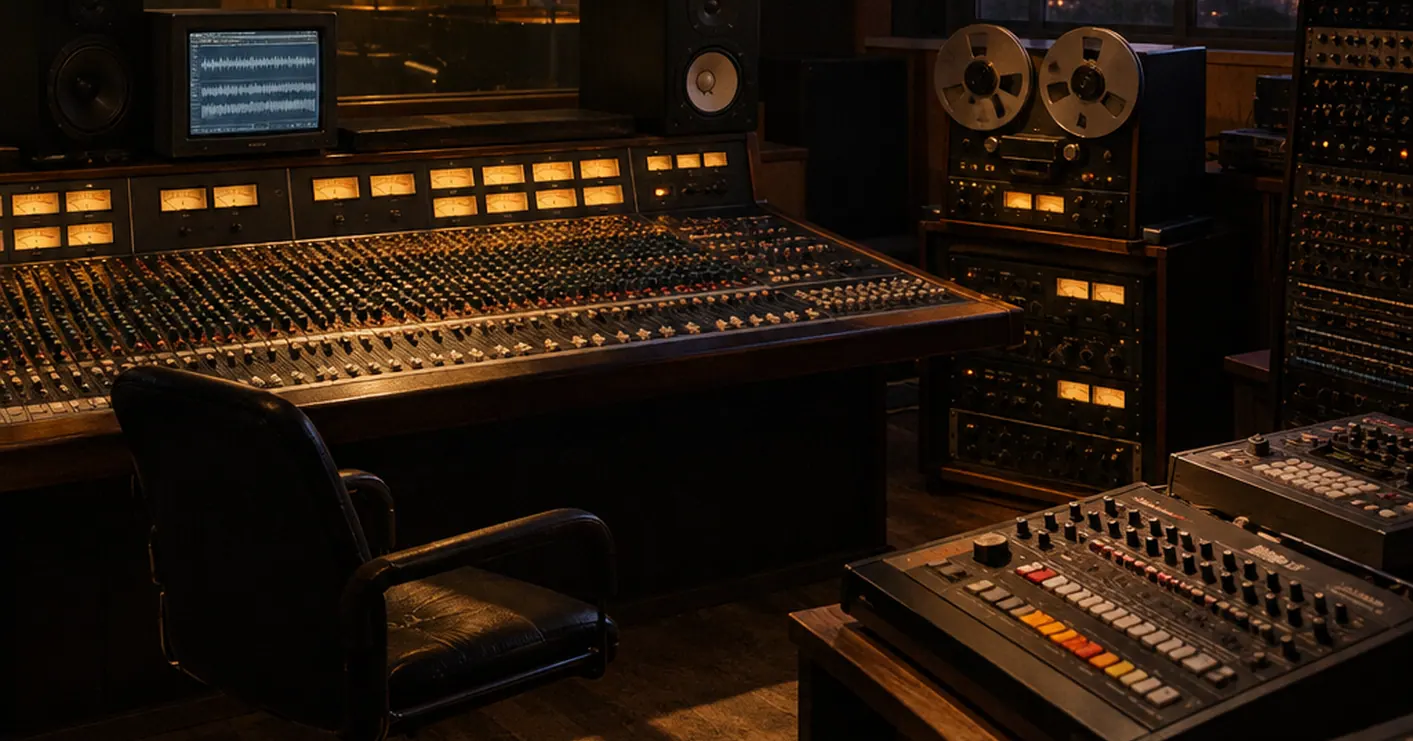
During remix tracking the partnership kept a fixed order. Robert Clivillés programmed the rhythmic bed first. Roland TR-909 drum-machine patterns and Akai MPC60 sequences built a rigid syncopated grid. David Cole then improvised live gospel piano chord progressions over that grid and guided Carey through unscripted vocal takes. Harmony followed percussion. The vocal followed the harmony Cole was finding in the room.
Programming the Bed Before the Vocal
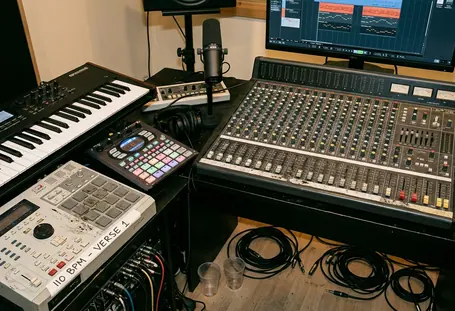
That order is why these mixes carry a different weight from album vocals dropped onto a house loop. Stem-pasting, the faster route, time-stretches an existing album acapella and lays it over a new beat. Engineers can finish that pass in 2 to 3 hours. Full vocal reconstruction is another day in the studio. Lead and background tracking for a C+C remix ran 8 to 14 hours. Carey treated tempo and groove as a new composition and sang to it, take after take, until the line sat inside the grid.
The duo locked signature house mixes between 116 and 122 beats per minute during studio practice. Multi-layered Korg M1 organ patches sat under three-part background vocal harmonies. The tempo band is narrow on purpose. A ballad dragged up toward 118 without a new vocal will sound yanked. A vocal tracked inside that band can phrase with the kick, leave space for the organ, and still have room for a choir answer.
Marks You Can Hear Without a Session Log
A pass through the collaborations comes down to three production signatures, audible without a track sheet.
- House piano stabs, Cole's language, hitting once the grid is already running.
- Extended vamp intros that hold the main hook back and let percussion and organ do the inviting.
- Call-and-response backing choir arrangements that answer the lead instead of smoothing it into a pad.
Track These Three Marks
Run the checklist on 'Emotions' first, then on 'Anytime You Need a Friend'. Piano stab, long intro, choir answer: all three present means a reconstructed C+C side. Miss the new lead vocal and you are hearing a quicker paste.
The hours explain the difference more cleanly than any slogan about club culture. Two or three hours buys a beat under a chorus the album already owns. Eight to fourteen hours buys a lead that knows the new tempo in its body. I hear that second kind of time in the way the ad-libs wait for the kick instead of fighting it.
The 4:09 Cut Beside the 5:50 Club Mix
The LP cut of 'Emotions' runs 4 minutes and 9 seconds. The 12-Inch Club Mix runs 5 minutes and 50 seconds. The extra length is structural, and most of the added drama sits up front.
One Minute and Thirty-Eight Seconds of Organ
Clivillés and Cole delayed the primary disco-funk bassline and the main vocal hook. They built a stripped-back intro of percussion, handclaps, and solo organ chords so the dancefloor could lean in before the full arrangement arrived. That prelude lasts 1 minute and 38 seconds: atmospheric gospel organ and percussion, no rush toward the chorus. On a late-night system the wait is the point. The hook lands harder because the room has already locked to the clap.
Play the LP opening next to it and the contrast is immediate. The album cut states its case quickly, radio-ready, hook in reach. The club mix withholds the same hook until the organ has finished its invitation. Same song, different clock, different job for the first ninety-eight seconds.
F5 to G5, Then G6 to E7
The vocal choices inside that longer frame are specific enough to isolate on a second pass. In the verses Carey alters her phrasing against the new grid, leaning into the syncopation Clivillés programmed before she sang. Through the expanded bridge she sustains chest-voice belts across the F5 to G5 range, grit forward, the note held where a ballad mix might have tapered. In the final two minutes she uses the opened instrumental space for sequential whistle-register staccato runs from G6 to E7, counter-melodies riding above the choir and the organ.
Those pitches are a listening target, not a trivia card. Follow the chest voice through the bridge, then keep your ear on the top line once the last two minutes begin. The whistle figures answer the hook they spent the intro delaying. The 5:50 cut gives them room the 4:09 cut never budgeted.
Anyone who has followed her later live performances will recognize the belt. It is already fully present here, tracked in 1991 for a club system, chest voice first and whistle after, with the organ still holding the harmony underneath.
Ten Minutes and Fifty-Four Seconds of 'Anytime You Need a Friend'
The 'Music Box' album version of 'Anytime You Need a Friend' is a sweeping adult-contemporary ballad: orchestral strings, a slow-burn rhythm section, polite restraint in the lyric's offer of comfort. It runs 4 minutes and 26 seconds. Early in 1994, Cole stripped that orchestral string arrangement and the slow tempo out entirely. He rebuilt the harmonic bed around aggressive house piano stabs and a driving four-on-the-floor kick. The new bed asked for a brand-new, high-energy vocal. Stem-pasting the ballad acapella over that kick would have collapsed.
Strings Out, Piano In
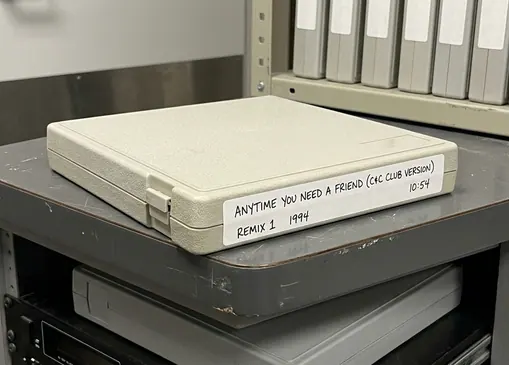
The unedited C+C Club Version spans 10 minutes and 54 seconds on the original May 1994 12-inch vinyl and CD maxi-single pressings. The commercial video edit truncates the track to 4 minutes and 8 seconds. Press archives of those maxi-singles are the practical guide here: the full timing lives on the vinyl and the maxi-single, and again on the 2020 digital EP. The video edit is a different object.
What the shorter cut removes is the center of the performance. The final 4 minutes and 15 seconds of the full-length club mix are an unscripted call-and-response between Carey's upper-belted ad-libs and a multi-tracked gospel choir. Standard radio compilation discs and video-edit streams leave out that passage, so the complete performance means the 10-minute-and-54-second C+C Club Version from the 1994 maxi-single or the 2020 digital EP.
Broadcast Cuts Drop the Climax
A 4:08 video edit can pass for the club version in a playlist title. It is not the record. If the choir improvisation never arrives, you are still in the broadcast cut. Stay with the side until the ten-minute mark.
Arrangement shifts line up cleanly once both masters are in earshot. Cole replaces the ballad's slow string buildup with driving house piano chords. The lyric, an offer of steadfast friendship, moves from a hushed adult-contemporary register into sustained belt runs and an exhaustive multi-minute gospel choir climax. The words do not change. The emotional temperature does. Comfort becomes testimony. The kick does not let the promise stay polite.
On the commercial side of a 1994 single campaign, a video edit is the version built to travel: broadcast clocks, promo reels, a length a programmer can slot. The maxi-single is the version built to be played through. Archival listening starts with the longer pressing and treats the 4:08 as a footnote, useful only to hear what was removed.
Album Cut, Then Club Mix, in One Queue
The workflow set with Clivillés and Cole between 1991 and 1994 carried forward. It informed Carey's vocal re-recording approach on more than 25 subsequent dance and hip-hop remixes recorded between 1995 and 2005, including later collaborations with Morales, Dupri, and Clue. New leads, cut to the remix, became a habit. The dance catalog sits as an equal pillar beside the ballad albums, not a sidecar of promo edits.
Pair the Two Masters
Place each C+C mix directly after its album cut. Do not park the club sides in a separate remix folder. The conversation between studio polish and club immediacy only happens when the two clocks touch.
A concrete sequence for one night:
- Play the 4:09 LP cut of 'Emotions', then the 5:50 12-Inch Club Mix, and note where the 1:38 organ prelude inserts time the album never had.
- Move to 'Anytime You Need a Friend'. Play the 4:26 album ballad straight into the 10:54 C+C Club Version.
- Keep the pair intact. Together they make a continuous 15-minute-and-20-second comparative block: strings, then house piano; restraint, then the 4-minute-and-15-second choir improvisation.
Archivists building retrospective playlists already work this way, album cut then club mix, so the two halves read as one compositional pair. Isolated remix folders hide the argument. Side by side, the argument is audible in under a quarter of an hour.
When you queue 'Anytime You Need a Friend' tonight and set the polite restraint of the LP ballad against the unfiltered vocal improvisation of the C+C Club Version, which recording sounds like the definitive original?